Welcome to Year 3 Class Page
w32 We are really excited to share all our news and information with you - as well as the children's achievements!
Our class teachers are Miss Barnes (3B) and Miss Stockton (3S)
Our support assistants are Mrs Rawlings (3B) and Miss Kelly (3S)
If you need to speak to your child's class teacher, please catch us after school or by making an appointment via the office. We look forward to a really exciting school year!
Newsletters
Class 3B - Our Learning Blog
Summer 1 Week 4
PE
Year 3 enjoyed learning cricket skills in PE this week. We practised throwing, catching, batting and bowling. Everyone showed great teamwork, determination and sportsmanship while improving their skills.

English
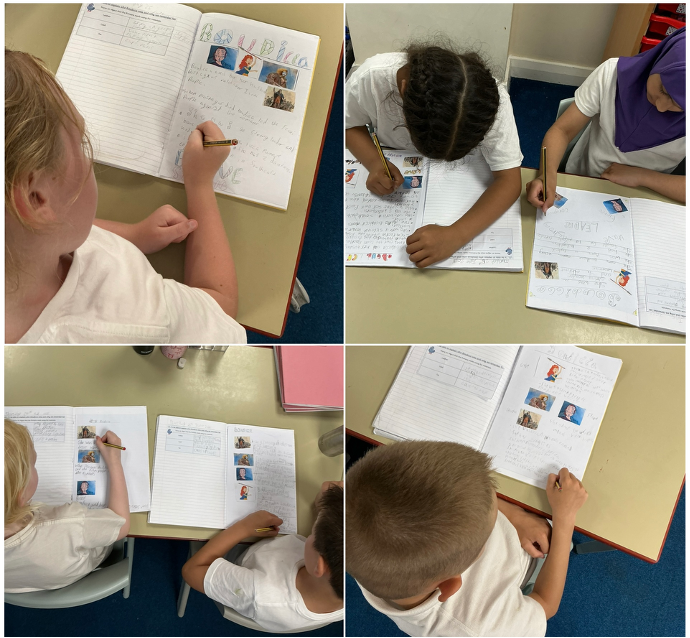
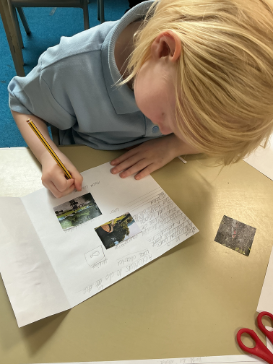
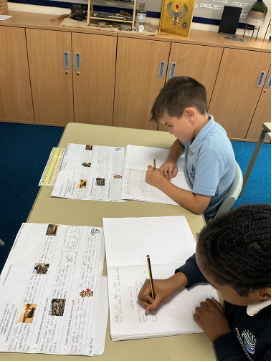
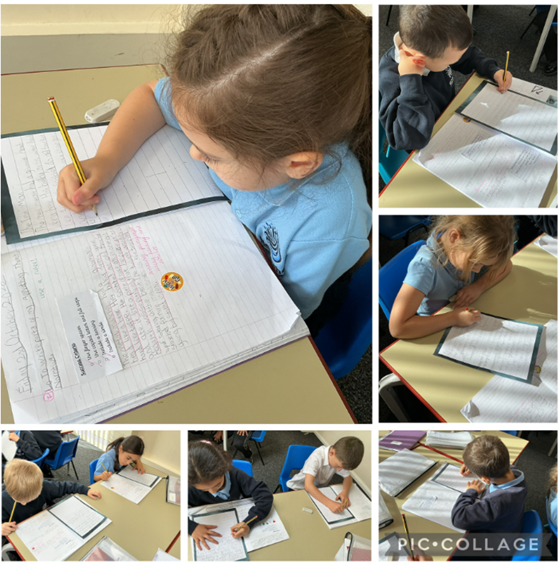
This week, Year 3 have been writing Egyptian mystery narratives using their plans. The children worked hard to describe the Egyptian desert, pyramids and ancient tombs using descriptive expanded noun phrases.
The children wrote in first person as Emily Sands, an Egyptologist searching for the lost tomb of Osiris. They showed the character’s feelings through actions and included speech in their writing.
Summer 1 Week 3
Science
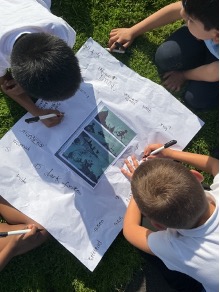
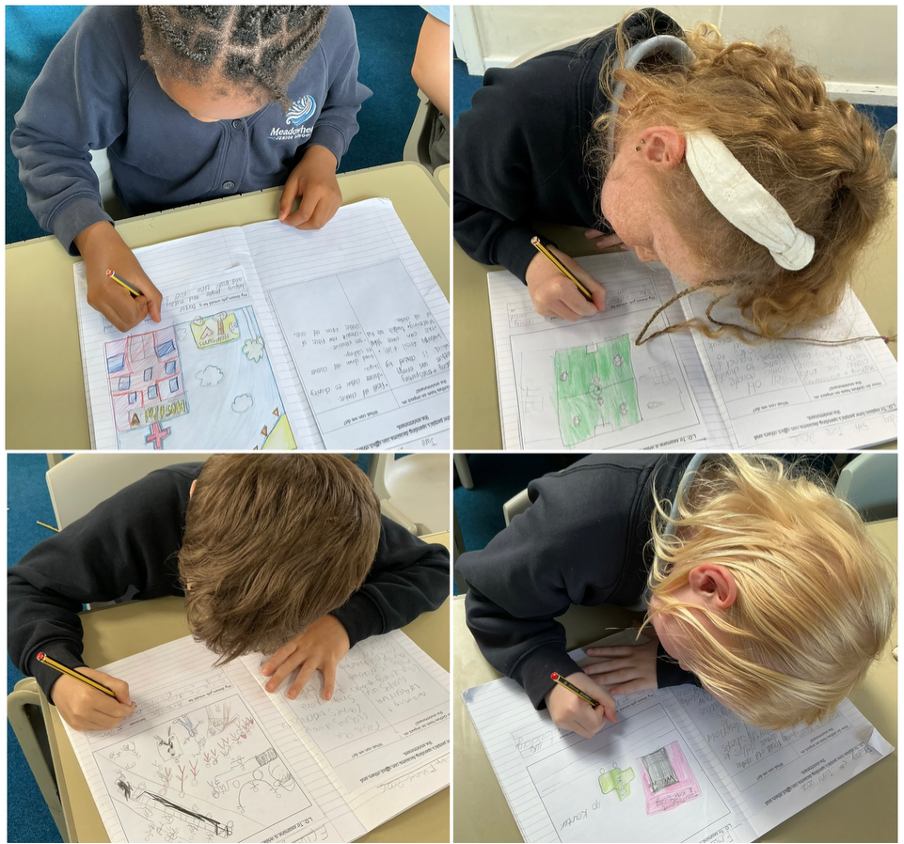
Today, we took our learning outdoors and explored the school grounds to see what plants and living things we could discover! The children carefully observed flowers, plants, trees, and even a few insects. They took their time drawing what they saw and labelling each part, from petals and stems to leaves and roots.
Everyone loved learning outside and using our surroundings to bring science to life. We can’t wait to continue our topic and find out even more about how plants grow!

For a plant to survive, it will need water, sunlight and air. If it doesn’t have one of them, it will die. – Maryam
Plants can also give you oxygen. – Gabriella
You must not give plants too much water because they can die. – Delilah
We found daisies, dandelions and trees. I have only noticed the daisies coming out in spring. I don’t think they would survive in winter because of the cold weather. – George
Summer 1 Week 2
Art
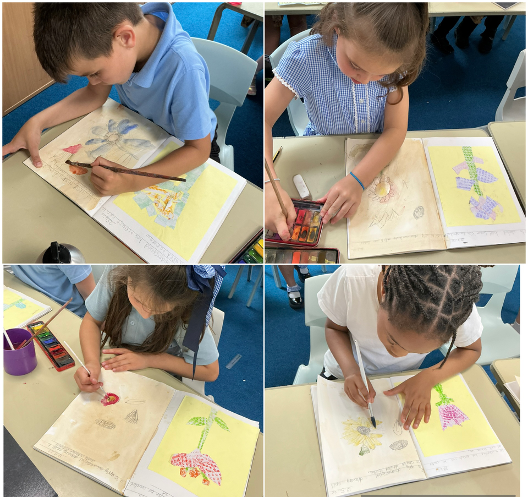
In our art lesson this week, we explored how artists use shapes to help them draw, discovering that everything around us, from classroom doors to objects in nature, can be broken down into simple shapes first. The children learnt the difference between geometric shapes (with straight lines and angles) and organic shapes (irregular and natural), before putting this into practice with their own still life drawings. Using sketchbooks and a range of pencils, they started by lightly sketching simple shapes to place their objects on the page, then went back to add detail and refine their work.

History
This week, Year 3 discovered how the ancient Egyptians used the River Nile as a busy trade route to connect with the world around them. We learnt that Egypt exported wonderful things like grain, linen cloth, and papyrus paper. Egyptian traders imported items that Egypt couldn't produce itself, such as cedar wood from Lebanon, silver from Syria and ivory from Nubia. The children were amazed to find out that Egypt had plenty of resources but still relied on trading to stay wealthy and powerful!

Summer 1 Week 1
English
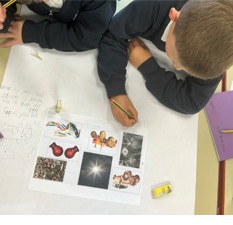
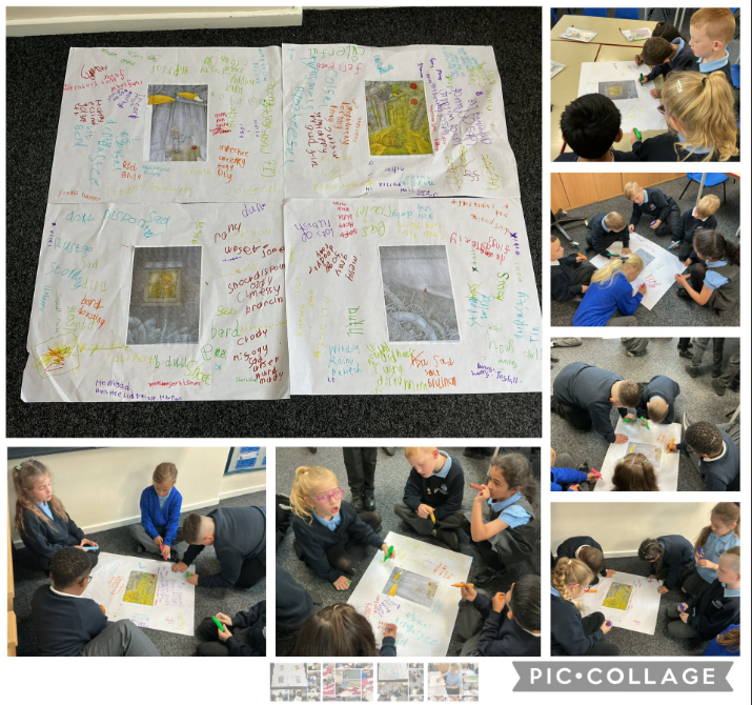
This week, Year 3 explored clues to predict what this unit's book will be about. We listened to a soundscape and carefully examined a range of images and objects as clues.
The children worked in groups to label the clues, sharing ideas and using descriptive vocabulary to make predictions. They identified links to Egypt and suggested the story could be about an explorer or archaeologist.
We then revealed that the book follows Emily Sands, an explorer whose lost journal tells of her expedition to find the tomb of Osiris before mysteriously ending. The class is excited to read on and discover what happens next!

I think this story is going to be about the River Nile and the Ancient Egyptians. I think this because I spotted a jar full of River Nile water and writing that looked like it was from Ancient Egyptian times. – Zara
I predict the story will be about an archaeologist that finds artefacts in Egypt. – Freya
I think this story could be linked to our Geography lessons and people have come to clean the River Nile. – Roaa
I think this story will be about explorers who find the River Nile and become wealthy from growing crops in the rich soil near the river. They would also be very well hydrated to build the pyramids. – George
I think this will be a non-fiction book full of facts about Ancient Egypt, the River Nile and artefacts. I think we will be able to learn lots about how the ancient Egyptians lived. I hope we find out how they mummify people. – Maryam
Maths
In our maths lesson, Year 3 used Polydron to build 3D shapes and explore their properties. We worked in pairs to identify 2D shapes and join them together to create 3D shapes such as cubes, cuboids, pyramids, and triangular prisms. We described the number and shape of their faces and discovered that the number of pieces used matched the number of faces. We also learnt that some shapes, like cones, cannot be made from flat shapes, and we worked hard to explain our thinking using accurate vocabulary.

PSHE
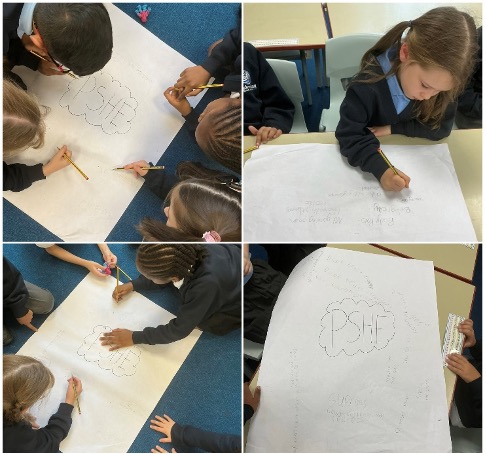
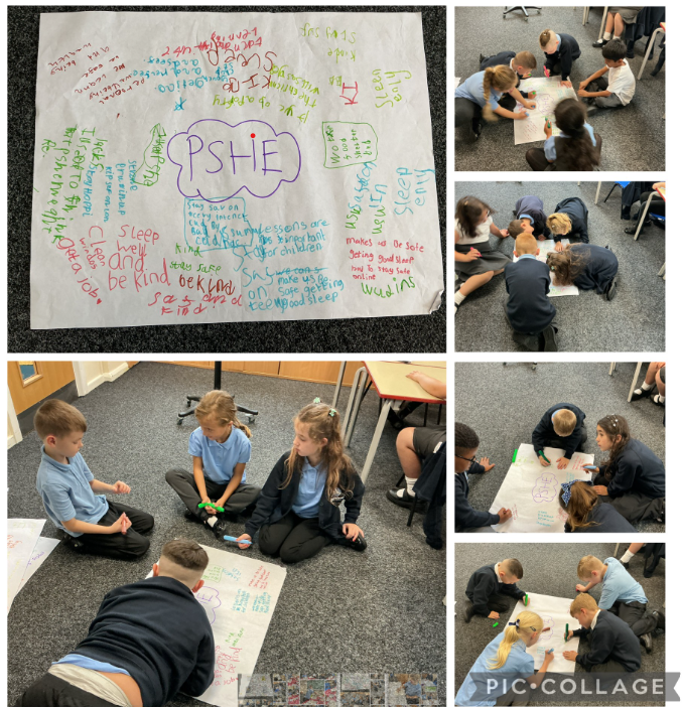
In today’s lesson, we learnt that a community is a group of people living or working in the same area, and we explored who and what makes up our local community. We discussed different groups of people, such as children, adults, and community helpers, and identified places like schools, libraries, medical centres, and parks that everyone can use in different ways. Through activities, we discovered how people and places are connected and how different groups use the same spaces for different purposes. We also thought about what might happen if important community places were no longer there and how communities work best when people support and help each other.

A community is group of people that live near each other and help each other. – Leena
A community can be a group of people that work together to accomplish something. – Maryam
Our school is a community, and the teachers here help us. If we didn’t have schools, children wouldn’t be able to learn, and we might not be able to get the jobs we want when we are older. -Mya
Without doctors and nurses in our community, people who are ill won’t get any better, but doctors and nurses also need other helpers, like teachers, police officers and postmen. - Freddie
Teachers, police officers, doctors and nurses and shop keepers all work in our local community. – Gabriella
Spring 2 Week 5
Design Technology
As part of our DT unit, Year 3 have learnt how to design a collar based on a theme and develop a template, adapting it to meet different design criteria. We also learnt about how Ancient Egyptians used collars as personal decorations that lay across the neck and shoulders. These collars were made from materials such as papyrus and were decorated with shells or wooden beads, while wealthier people used precious metals and stones like gold and lapis lazuli. They were worn by important members of society, such as pharaohs and other honoured individuals.
We explored how our own designs can represent our personality, choose suitable fabrics and materials, and added decoration using cross-stitch and appliqué. We learnt that design criteria should guide our ideas without being too specific and were introduced to the difference between symmetrical and asymmetrical designs. We then cut out our collar templates, tested that they fit, adjusted them if needed, and developed the shape to match our design ideas.


Behaviour Treat
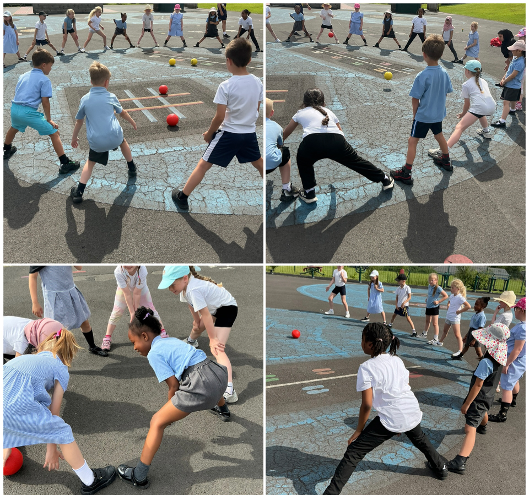
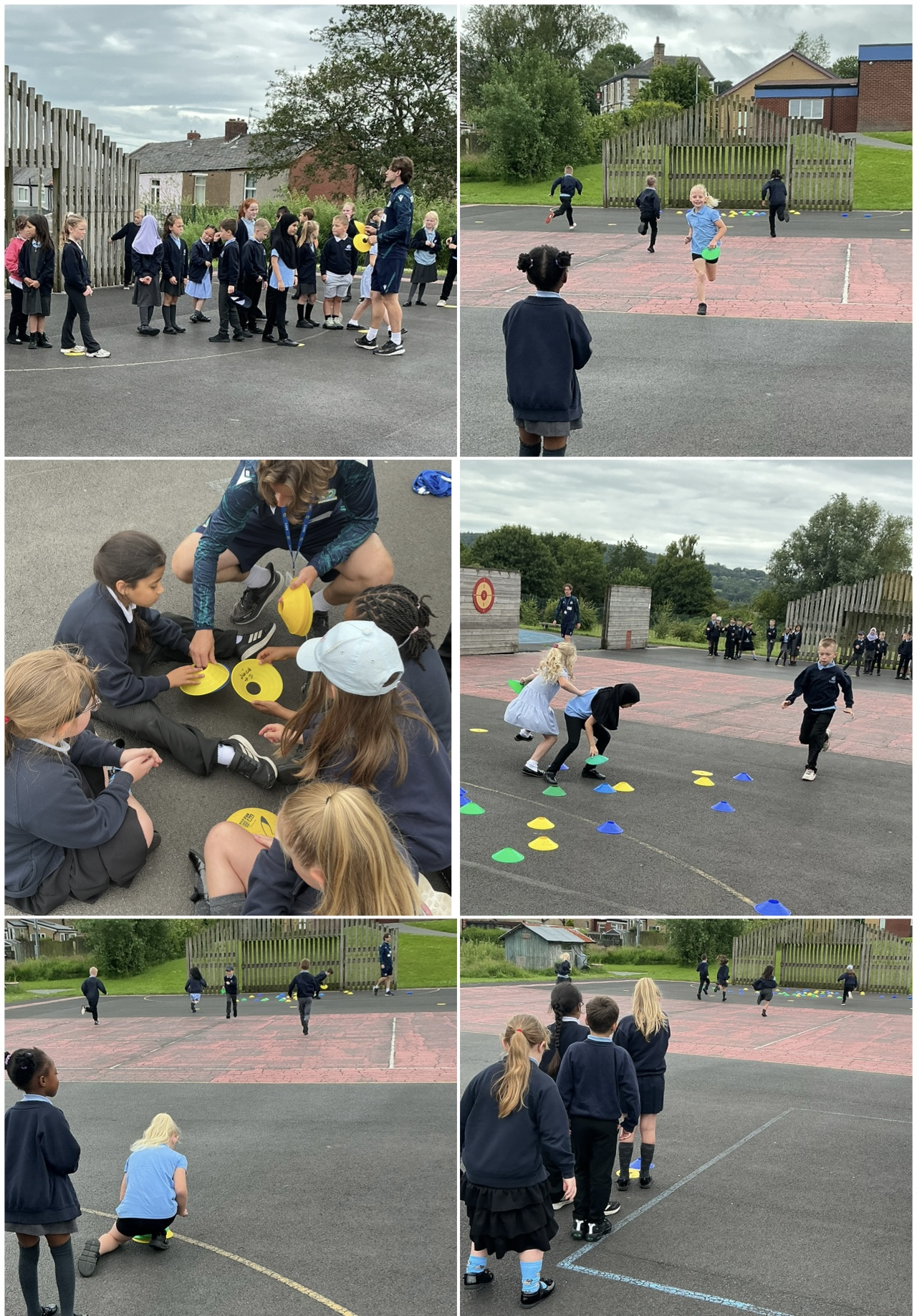
This term, Year 3 have been rewarded with glow in the dark sports! The class have worked incredibly hard and have consistently demonstrated our school values of respect, kindness, friendship, and ambition.
We are so proud of how everyone has approached their learning and supported one another throughout the term. As a special way to celebrate all of this effort and positive behaviour, the children enjoyed taking part in a fun behaviour treat.
What better way to end a fantastic term than by having fun together and celebrating all of our hard work! Well done, Year 3!

A Special Visit from The Fun Food Chef!
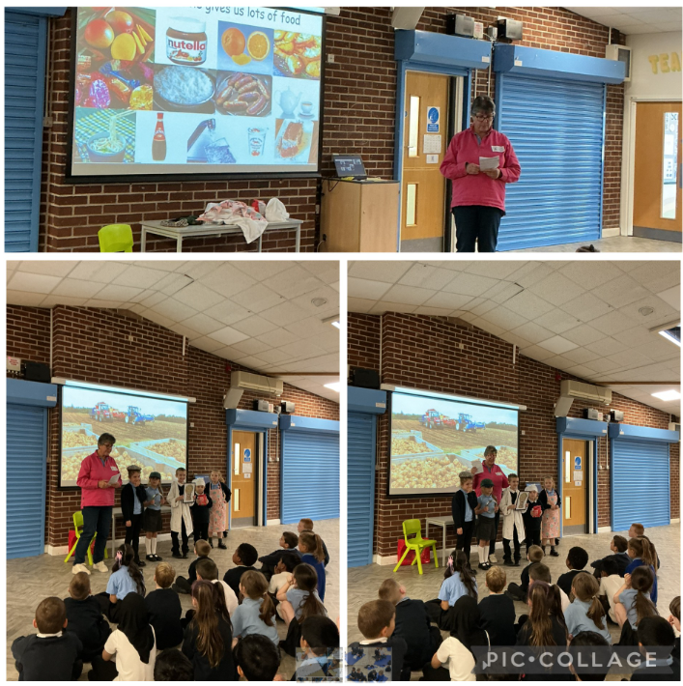
This week, our Year 3 class enjoyed a visit from a chef as part of our Eid celebrations. It was a wonderful opportunity to learn about different religions, cultures, and foods from around the world.
Before cooking, we followed important health and safety rules by washing our hands, wearing aprons, and learning how to use equipment safely.
We made a variety of dishes, including Egyptian flatbread, Nigerian plantain, Malaysian vegetable curry, tandoori Quorn, Moroccan lemon rice, mango rice pudding, and lemon and ginger tea. We practised key skills such as mixing, chopping, slicing, and kneading.

One skill I learnt was that you should use the knife at a straight angle facing the table. I tried plantain for the first time and I liked it. – George
I liked the mango rice pudding and lemon tea. – Freddie
Today we had to cut, mix, peel, slice and chop. – Lawe
I tried kneading the dough for the first time and then flattened it into a pitta shape and placed it on the baking tray. – Gabriella
Science
In our science lesson, we investigated friction by testing how different materials such as hessian, bubble wrap, tarpaulin, and cardboard affected a toy car rolling down a ramp. The class made predictions, helped to make the test fair, carried out their observations, and then evaluated whether their predictions were correct. Instead of measuring distance, we gradually lifted the ramp higher each time to see when the car would start to move. This helped us understand how much friction each surface created, as materials with more friction needed a steeper ramp for the car to begin moving. We also learnt that gravity is the force that pulls the car down the ramp, and changing the height helped us see how friction and gravity work together. This showed us clearly which surfaces created the most and least friction.

Spring 2 Week 4
Book Bus
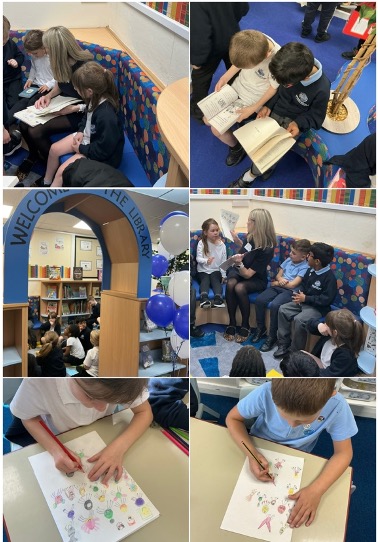
This week, Year 3 had an exciting visit from the Book Bus! A group of children from our class had the special opportunity to go and explore all the wonderful books on board.
There were so many different stories to choose from, and everyone worked together to carefully select a variety of books. We brought them back to our classroom and are excited to add them to our reading corner for everyone to enjoy.

Science
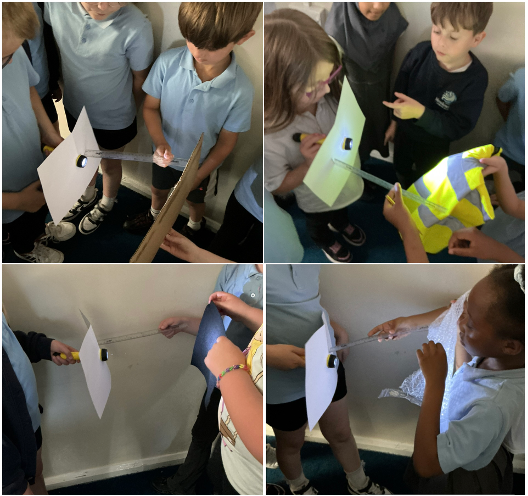
Today, the children explored magnets by using bar magnets and iron filings to make magnetic fields visible. They were excited to see the iron filings form patterns around the magnets, helping them understand how magnetic forces work. The class observed that the filings were most concentrated at the ends of the magnets and correctly identified these as the poles, where the magnetic force is strongest.


The magnet was attracting the iron filings and pulling them in. Most of them were at both poles. – Gabriella
The magnetic force is attracting the metal filings. – Adalynn
You can’t usually see a magnetic force, but by using the iron filings you can see a sort of pattern where the filings are being attracted. – Eliza
Year 3 also carried out a science investigation to find out if a magnet could attract a paper clip through different materials. We tested paper, card, cardboard, and felt, making predictions before we began. We discovered that the magnet was able to attract the paper clip through all the materials, although it sometimes needed to be held closer for thicker ones. This showed us that magnetic forces can pass through different materials. We enjoyed acting like scientists by predicting, testing, and discussing our results.

PE
This week in PE, Year 3 focused on athletics and had lots of fun developing our skills.
We practised relay races, learning how to work as a team and pass the baton carefully to the next runner. We discovered that good timing and clear communication helped us to make smooth handovers.
We also practised throwing a tennis ball as far as we could. We learnt how to stand correctly, aim carefully, and use our arms to throw with more power.
It was a great lesson, and we enjoyed improving our athletic skills while encouraging each other.

Spring 2 Week 3
Art
This week in Year 3, the children have completed their final sculpture pieces. After allowing their work to dry, they had the opportunity to reflect on their creations and celebrate their achievements.
Working in groups, the children thoughtfully discussed their sculptures, explaining the ideas and inspiration behind their designs. They shared the different techniques they used, including twisting, using tabs, concertina folds, slotting and rolling, showing a great understanding of the creative process.
It was wonderful to see the children engaging in meaningful conversations about their work. They also reflected on their finished pieces, considering what they might change or improve if they were to create their sculptures again. This helped them to think like real artists, learning from their experiences and developing their skills further.

Geography
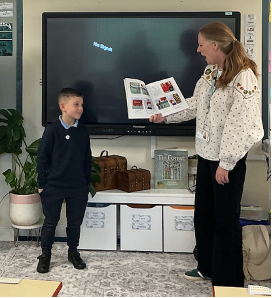
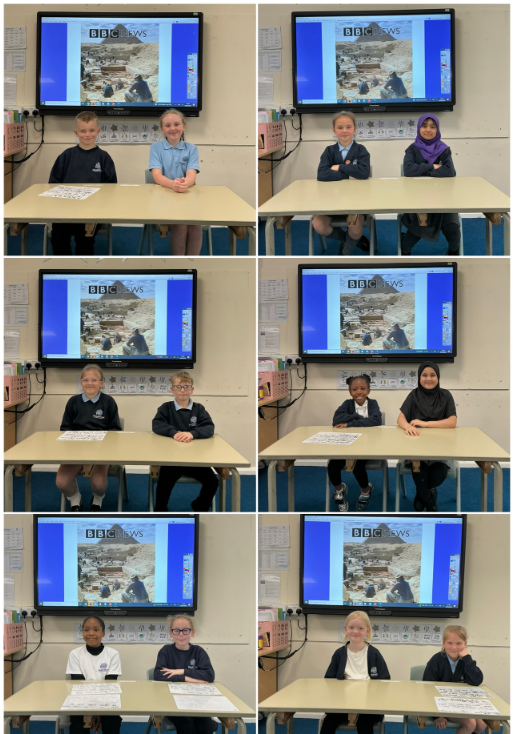
In our Geography lesson, Year 3 learned about how the River Nile has been used in the past and how it is still used today. We worked in groups and each group chose a topic: trade, tourism, transport or farming. We researched how people used the river for in ancient times and how it is used today, before sharing our ideas with the class through presentations. By listening to each group, we were able to learn about all four topics and understand why the River Nile has been so important to people for thousands of years.

Mother’s Day
This week in class we created Mother’s Day cards for our mums and the motherly figures in our lives. The children really enjoyed designing and making something special to show how much they care. We had lots of fun decorating our cards and thinking about kind messages to include. It was lovely to hear the children talking about their favourite things about their mums and the special things they do together. We hope the wonderful women in their lives enjoy their cards!

Spring 2 Week 2
World Book Day
This week Year 3 had lots of fun celebrating World Book Day. The children came to school dressed as their favourite book characters and enjoyed sharing their costumes with the class. We also created our own book boxes based on stories we love and spent time designing character profiles for our favourite book characters. It was a wonderful day celebrating reading and sharing our love of books together.

Geography
This week in Geography, Year 3 researched why the River Nile is so important in Africa. They learned how the river is used today for farming, providing water to help grow crops, and how it is still used for trade and transport, with boats carrying people and goods along the river. The class also explored the different jobs the Nile provides, including farmers, fishermen, tourism workers and people working at dams and power stations.

Lots of people think the River Nile is just in Egypt but it is in Northeast Africa and runs through more than one country. – Adalynn
The river Nile flows through 11 countries. – Gabriella
The River Nile is the longest river in the world. – Sharifa
The River Nile is 6650km long. – George
Maths
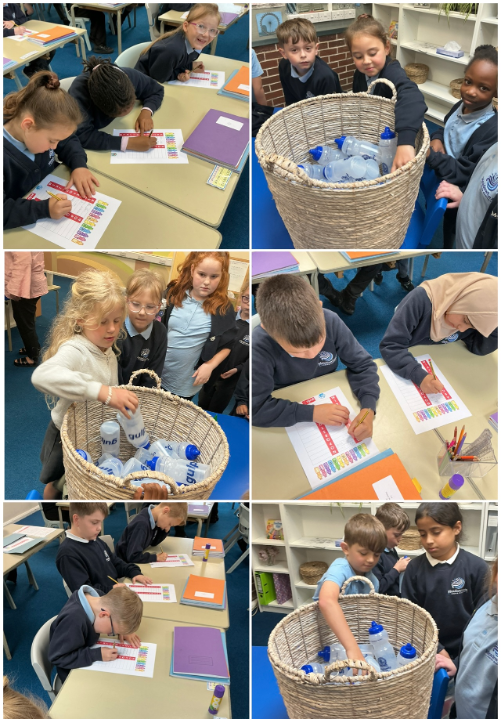
This week in maths, Year 3 continued learning about division using repeated subtraction. In this lesson, the children used bead strings to help them understand how groups of a number can be taken away to solve division problems. They used concrete materials to help divide numbers that are larger than the multiplication facts they already know. The children also learnt how to make their calculations more efficient by subtracting larger groups, such as 10 groups of the divisor at a time instead of one group each time.

Spring 2 Week 1
English
This week in English, Year 3 explored Pip and Egg by Alex Latimer through an immersive lesson using a countryside soundscape, carefully selected objects and images to spark curiosity and discussion about the story. The children explored how the objects might be connected, reflected on key quotes and looked at illustrations to make predictions about the characters and events.

The seed starting to grow reminds me of Jack and the Beanstalk. There is also an egg in that story, so maybe they’re similar. – Delilah
I think it might be springtime because I can see flowers growing in the grass, and seeds start to grow in spring, and chicks also hatch in spring. – Gabriella
The egg and the seed could have both fallen out of the same tree. Maybe the egg fell from a nest and the seed dropped from the tree. – Eliza
I think the egg and the seed are going to become friends and explore the forest together. – Lawe
I think the setting is maybe a park or a forest, but it must be close to a city because I can see tall buildings in the background. Zara
Year 3 continued reading the Vehicle Text and focused on how Pip and Egg began to change. Using a Role on the Wall activity, we described Egg’s appearance and actions on the outside and her emotions on the inside, thinking about how to show feelings without just naming them.

Art
In this art lesson, Year 3 pupils applied their knowledge of sculpture to create their own 3D artworks while working in small groups. Using their sketchbook plans, they selected and joined materials carefully, adapting their ideas when needed. After revisiting techniques such as folding, rolling, twisting and slotting cardboard, the children constructed their sculptures using shared resources. They explored the abstract sculpture Early One Morning by Anthony Caro and took part in an ‘agree or disagree’ discussion to think about whether it was 2D or 3D and what makes a sculpture abstract. The lesson ended with pupils sharing and discussing their own sculptures.

In this lesson, Year 3 pupils evaluated and improved their abstract sculptures. Working with their partners, they compared different sculptures and discussed what they liked about their own work and what they might change. The class took part in a gallery walk, asking and answering questions about each other’s creations. They explored how colour and texture can unite different shapes, then chose how to add texture and colour to their own sculptures using paint and collage materials. By the end of the lesson, pupils had thoughtfully refined and improved their artwork.

RE
This week in RE, Year 3 have been exploring the Easter story and how Christians celebrate Easter. We looked at different paintings showing key moments, from Jesus’ entry into the city to the resurrection, and discussed the emotions in each scene. The children talked about how the artwork made them feel, which part of the Easter story they thought it showed, how people who were there may have felt, and how Jesus may have felt. It was a thoughtful way to connect the story of Easter with the feelings it inspires.

Spring 1 Week 6
Behaviour Treat
Year 3 have enjoyed their special behaviour treat this week after working incredibly hard all term. We are very proud of their positive attitudes and teamwork, and this reward was well deserved.
The children worked together in teams to play dodgeball on an inflatable bouncy castle. There was lots of laughter and excitement throughout. It was a fantastic way to end an amazing term.

Geography
This term in Geography, Year 3 have been learning all about rivers. The children have explored what rivers are, how they are formed and why they are important around the world.
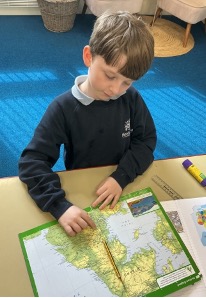
This week, the class worked in partners using atlases to locate famous rivers across the globe. They also practised finding and naming the seven continents and identifying well known rivers in each one. The children showed great teamwork and developing map skills as they carefully searched through their atlases.

PSHE
In PSHE this week, Year 3 learned about the role they can take in an emergency situation. The children discussed what they should do first if faced with an emergency and learned that it is most important to stop and think about their own safety before helping others.
They explored different emergency scenarios, including accidents at a skatepark, electric shocks, deep water and broken glass. In each situation, the children identified possible hazards and decided whether it was safe to approach or better to stay back. They understood that it is important not to make the situation worse by becoming another casualty.
The class also learned how to correctly call the emergency services. They practised what information to give, including what has happened, how serious the injuries are and the exact location. Working in pairs, the children took part in role play where they acted out calling the emergency services because a friend had been seriously injured at the park.
Year 3 showed thoughtful discussion and excellent teamwork during this important lesson.

Spring 1 Week 5
RE
In today’s lesson, Year 3 first read the story of Jonah and the Whale from the Bible. We looked at different pieces of artwork showing the story and shared our ideas about how the pictures made us feel, noticing what was similar and different in each one. We then acted out the story of Jonah and the Whale in small groups and performed to the class. We watched the videos from our performances and offered each group feedback.
. 
Jonah was told by God to go to Ninevah and deliver the message that they need to start being kind to each other before God punishes them. – Lawe
Jonah was afraid of the responsibility of being a prophet and delivering God’s message, so he ran away and got on a boat, heading in the opposite direction of Ninevah. There was a huge storm, and Jonah knew that it was God causing it, so to save the other people on the boat, he ordered them to throw him overboard, so the storm would stop and they would be safe. – Delilah
The storm stopped but a whale then swallowed Jonah, and he is in the stomach of the whale for three days. He prayed to God to ask for forgiveness and to give him a second chance. The whale spat Jonah out and he travelled to Ninevah immediately to deliver God’s message. – Leo
We also explored the story of Elijah from the Bible and discussed what happened in his story. We played a game of Hot Seat, where some children played the role of Elijah and answered questions from the class about his choices and feelings. We reflected on what these stories teach us about God and how they help us understand what a prophet is and what it means to be called by God.

Science
This week in Year 3, we learnt about muscles and how they work with our skeleton to help our bodies move. We focused on the arm and discovered how the biceps and triceps work in pairs. The biceps and triceps take turns to contract and relax, so the arm can bend and straighten.
The children worked in groups to create their own working models of an arm. They used card, to represent the bones, a split pin to act as the elbow joint, and an elastic band to show how a muscle works. As they moved the card, they could clearly see the elastic band tightening and loosening, just like a real muscle contracting and relaxing.

Art
In this lesson, Year 3 explored how to join materials in different ways when working in 3D. We recapped ways to make shapes three dimensional and learnt about the British sculptor Sir Anthony Caro, who created abstract sculptures and helped design the London Millennium Footbridge. This helped us think about strength, balance and how artists work with materials.
Working in small groups, the children planned and built large scale 3D sculptures using cardboard, card and paper. They experimented with folding, rolling, slotting and tabs. They used different joining materials while problem solving when ideas did not work first time, showing resilience and independence in their learning.


Maths
In this lesson, the children learnt how to derive multiplication facts for the 3 times tables by using facts they already know from the 2, 5 and 10 times tables. Because the class are confident with these multiplication tables, they were able to combine known facts, such as adding 5 × 3 and 2 × 3, to work out new facts like 7 × 3. We discussed this by making 7 groups of 3 and used number sentences to explain our thinking.
Using concrete materials, the children created arrays using counters to support their understanding of how multiplication facts can be combined. By visually adding groups together, the children were able to see how more difficult multiplication calculations could be worked out more easily. This practical approach helped build confidence and supported the children in remembering new multiplication facts for the 3 times table.

Spring 1 Week 4
Art
In Art this week, Year 3 explored sculpture by learning how to join 2D shapes to create 3D structures. At the beginning of the lesson, we looked at the work of American sculptor Robert Morris and his artwork BodySpaceMotionThings to help us understand what sculpture is.
We began by recapping how to use tools safely, choose materials carefully, and look closely at shape and form. Using card, the children worked in small groups to fold, curve and cut slots to join shapes together without glue or tape. They used two contrasting colours of card, one for the base and one for the structure, to help their designs stand out. Their challenge was to create a 3D structure that could stand up on its own.
The children showed great teamwork, creativity and problem-solving skills throughout the lesson. Well done Year 3!

Me and Hunter made a rollercoaster with 2 arches creating a tunnel, and we folded our card to create a carriage with seats. – Zara
We made a doll house, we folded different shapes from card to create a door, a fireplace, tables and chairs. – Maryam
The card starts off 2D because it is flat, but when you start to cut out shapes and fold them, you can stand them up to create 3D structures. – Mya
I created stairs by folding a piece of card forwards and backwards and these were the steps to my house. I joined the sides of my house by cutting a slit and slotting them together. – Gabriella
Science
In Science this week, Year 3 learned that animals, including humans, have skeletons to support their bodies, protect organs, and help them move. Skeletons give animals and humans their shape and keep them upright.
The children worked in groups to identify bones of the skeleton. They learned that the human skeleton is made of bones that grow as we grow, starting with around 270 bones at birth and ending with about 206 in adults.
We talked about how some bones protect important organs, like the skull protecting the brain and the ribs protecting the heart and lungs. The children also learned about joints, such as knees and ankles, which help our bodies bend and move.

The femur is the longest and strongest bone in the body. – Fraser
The skull is very important protects the brain. The brain is an organ that control how we think, move and feel. - Maryam
When you break a bone, you might have to wear a cast to protect the bones and allow the two broken pieces to fuse back together. – Eliza
Maths
In Maths this week, Year 3 explored multiplication as repeated addition. The children built on their understanding of arrays and learnt to read multiplication as groups of a number, such as 6 groups of 3.
The children were able to show multiplication using arrays, bead strings and number lines to demonstrate how multiplication is repeated addition. They practised counting in equal jumps to help calculate the 3 and 4 times tables. By the end of the lesson, the children were confidently representing multiplication and explaining their thinking.

Spring 1 Week 3
Fine motor skills
In Year 3, some children have been enjoying taking part in fine motor skills activities as part of an intervention. These activities include cutting, threading, building with small objects, and using tweezers and Play-Doh. The children have shown great focus and enthusiasm while completing the tasks.
By building these fine motor skills, the children have been able to improve their handwriting and letter formation. Stronger hands and fingers help the children to hold their pencils more confidently and form letters more clearly. We are very proud of the effort they are making and the progress they are showing.

English
Today in English, we have been exploring the illustrations in the book Rhythm of the Rain by Grahame Baker-Smith through drama and role play. The children worked in groups to bring the settings to life by moving through them, making sounds, and imagining what they could see, hear and feel. They practised speaking in a narrator’s voice and used rich descriptive language, including expanded noun phrases, adverbs, and personification, describing the river, trees, and forest as if they were alive. This helped the children clearly verbalise and develop their ideas, ready for writing their own direct narratives in the next lesson.

You duck under the tree’s branches as you make your way through the forest. - Maryam
You spot the bright sun shining through the leaves of the trees. - Hunter
You take a deep breath as you relax on the grass. – Leena
You can smell the fresh water as the river rushes by. – Eliza
You lay in the river whilst the water rushes past you like silk. – Adalynn
The water splashes the family of otters playfully. – Zara
Maths
In maths this week, we have been working with concrete materials to help us understand subtraction. The children practised using the column method and learnt how to exchange 1 ten for ten ones when subtracting larger numbers. By using practical materials, they could see how the numbers move and practise the steps, which helped them feel more confident when working with subtraction in their books.

Spring 1 Week 2
World Religion Day
This week, Year 3 have been celebrating World Religion Day. We have been learning about the main world religions, exploring their beliefs and holy books, and finding out how people around the world practise their faith.
We were also excited to welcome an interfaith panel to our school, with representatives from Christianity, Buddhism, Hinduism, and Islam. The children asked thoughtful questions and showed great curiosity and respect while learning more about different beliefs.
It has been wonderful to see Year 3 engaging with the diversity of the world’s religions with kindness and interest. Well done for your fantastic learning and positive attitudes!


It is important to learn about other peoples’ beliefs so we can be respectful towards them. – Zara
We can show respect to people with different beliefs by taking the time to listen to people talk about their religion, look at them and listen carefully to what they have to say and ask questions. – Maryam
I am a Christian and I read bible stories to my mum. I got to church with my family, and we listen to the priest, pray and sing songs. After church, we go to Sunday School and after that we have snacks and sometimes we have events at the church. We celebrate Christmas, which is to remember the birth of baby Jesus and we also celebrate Easter. – Gabriella
I am a Muslim and I pray every day to Allah and straight after school, I pray and we also pray before bed. Every Friday after school, we go to mosque. we give money to charity at mosque and pray there. We celebrate two Eids, one is for sacrificing an animal and the other is for fasting for Ramdan. – Maryam
Maths
This week in maths, Year 3 have been learning how to add numbers using the column method. They used concrete materials to help them understand their learning and support their calculations. The children practised partitioning two-digit numbers into tens and ones and placing them carefully into the correct columns on a place value chart.
They remembered an important rule when adding: always start with the ones column first and then move on to the tens. The class did well at using the correct mathematical vocabulary to explain their thinking.
Year 3 stepped up to the challenge of adding two three-digit numbers and showed fantastic confidence by applying the same written method they already knew to solve these trickier calculations.

English
This week, the children explored illustrations from Rhythm of the Rain without seeing the front cover, encouraging them to make predictions about what the text might be about. They studied different water settings, shared descriptive words and discussed what might be happening in each scene. This helped develop their oracy skills, vocabulary and confidence in explaining their ideas.


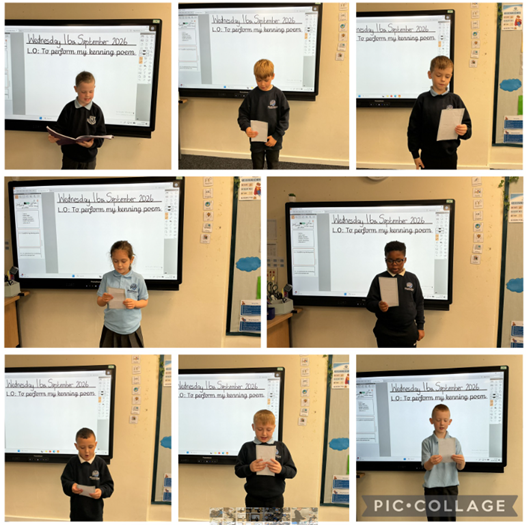
This week, Year 3 wrote their own kenning poems based on an illustration. They practised performing them aloud to develop their oracy skills and focused on using clear voices and expression, to bring their poems to life. Some children added actions to support their performance, and the class showed growing confidence and creativity when sharing their work.

Spring 1 Week 1
Shared Reading
In our Shared Reading lessons this week, Year 3 have been enjoying reading exciting extracts from The Last Firefox by Lee Newbery. The children have been really engaged with the story and curious about what might happen next!
We have been exploring lots of new and interesting vocabulary, discussing the meanings of unfamiliar words and practising how to use them in sentences. We have also been working hard on reading fluently. As a class, we have been practising choral reading, reading together with clear voices, expression, and fun actions to help bring the story to life.
Tear 3 have been developing their inference skills. The children have been learning how to read between the lines to infer characters’ thoughts and feelings, using clues from the text to support their ideas.

Science
This week in Science, Year 3 have been busy conducting an exciting experiment to determine which rock is the hardest.
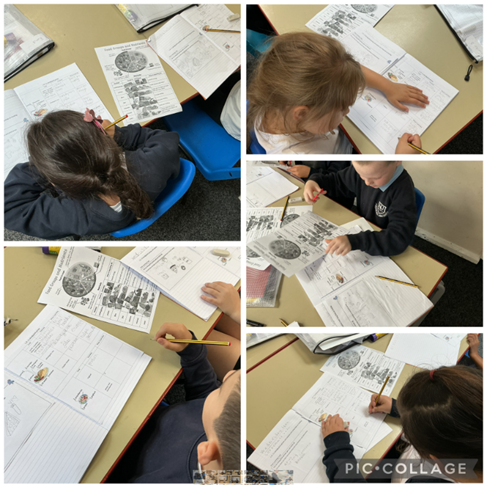
We began the lesson by working scientifically and classifying different rock types. The children explored the properties of marble, basalt, sandstone, chalk and slate, carefully observing and feeling each one. From this, they made predictions about which rock they thought would be the hardest and explained their reasons.
Next, the children worked in small groups to carry out a fair test. To keep the test fair, the same person scratched each rock using their fingernail, then a nail, and finally another rock. The same rock was used each time to scratch the others so that results could be compared accurately.
Each group carefully recorded their results and discussed what they noticed. At the end of the lesson, the children wrote conclusions to summarise their findings and explain which rock they discovered was the hardest.
Well done, Year 3, for your excellent teamwork, careful observations and brilliant scientific thinking!

Autumn 2 Week 7
Aspirations
As part of our Aspirations unit, Year 3 created dream boards to explore what they would like to be when they are older, selecting and arranging pictures to show the jobs they are interested in, the school subjects they will need to be good at and the personal qualities that will help them succeed; through this creative activity, the children reflected on their future goals, developed self-awareness and began to understand the important link between learning, skills and aspirations.
I want to be a youtuber! I will need to work hard at computing and be determined when editing videos. I will also need to be confident when speaking to viewers. – Gabriella
I want to be a footballer. I will need to have perseverance and work hard in training every week and be a great team player. – Leo
I will need to work hard in science and history to be a palaeontologist. I will need to be determined and patient. – Zara
Behaviour Treat
This term, Year 3 were rewarded with a very exciting behaviour treat, a Nerf gun war! The children have worked incredibly hard throughout the year and consistently demonstrated our school values in and out of the classroom.
They showed teamwork, kindness and excellent attitudes to learning, so it was fantastic to see them having so much fun together. There were lots of smiles, laughter and friendly competition as everyone thoroughly enjoyed their well-deserved treat. We are very proud of Year 3 and all that they have achieved this year!

Christmas party
Year 3 had a wonderful time this week celebrating Christmas with our very own class party! The children enjoyed lots of dancing, fun games and exciting prizes, and the classroom was full of smiles and laughter. We also shared a delicious Christmas dinner together, which made the day feel extra special. It was a lovely way to end the term and celebrate all the hard work the children have put in this year.

Autumn 2 Week 6
DT: Pneumatic Toy
During our DT unit, the children have been busy designing and making their own pneumatic toys for an child to use. They started by creating their own design criteria, deciding that their toys must be colourful, appealing and able to open and close their mouths using air moving in and out of a balloon.
The children designed a range of exciting animals and monsters, adding creative 3D features such as ears and eyes to bring their ideas to life. They worked carefully to make sure their toys met the design brief and were fun for the user.


English
To explore our new writing unit, the classroom was transformed with a woodland soundscape, photographs of foxes, and descriptive vocabulary displayed around the room. The children explored the words and discussed whether they showed foxes in a positive or negative light. We then looked at a letter we received from a fox, questioning why foxes are so often described as sly or unpleasant, and the children shared examples from books and films to consider whether this is always true.


In the story the gingerbread man, a fox offers the gingerbread man to carry across the river and instead, tries to eat him instead. The fox character in this story is evil. -Eliza
In peter Rabbit, the fox character is devious because he tries to hurt the rabbits. – Delilah
In books and films, foxes sometimes have negative reputations, and they are sly, mean characters but foxes are actually just shy animals. – Gabriella
Year 3 also learned that there has been significant debate about foxes in the UK, with some people viewing them as vermin and others arguing about the ban on fox hunting. In groups, the children took on the roles of members of the public, farmers, and news reporters to debate these issues, repeating key facts and using them to support different sides of the argument. Through this roleplay, they explored how the reputation of foxes influences public opinion while also practising their oracy skills, gaining confidence in expressing their ideas and understanding how debates work.
Foxes can make high pitch screams that sounds like humans and there have been many phone calls made to the police because people think somebody is in danger, but it’s actually just a fox. – Mya
Farmers like foxes because they kill rabbits who eat all of their crops. – Adalynn
Foxes can carry diseases which can spread to our pets. – Eliza
If you kill the mummy fox, who is going to look after her cubs? They depend on her in their first few months because they are born deaf and blind. – Gabriella
Fox hunting is a traditional sport that has been around for over 200 years in the UK. – Leena
Fox hunting is cruel! Would you like lots of horses, dogs and people chasing you? The fox must be petrified. – Jaxon
Christmas Fair
This week, Year 3 have been busy working hard to create some fantastic hot chocolate reindeer cones to sell at our school Christmas fair. The children carefully measured, assembled and decorated their cones, showing great teamwork and creativity throughout the process. They were very proud of their finished products and are excited to sell them to help raise money for our school.

Autumn 2 Week 5
History
Year 3 explored a range of Stone Age artefacts, including flints, animal skin and mammoth-tusk jewellery. The children discussed what these objects might have been used for and shared what they already knew, linking back to their learning about prehistoric art. We learnt how cave paintings give us clues about the past and discovered that some artwork in the Rouffignac caves in France was created by very young children. The class then explored how early humans found their food. They learnt that people were hunter-gatherers who moved from place to place, using tools such as stone hand-axes, bone hammers, sharpened sticks, and later bows and flint-tipped spears. They gathered nuts, berries and roots, fished with nets and harpoons, and cooked food over a fire. The children created their own Stone Age menus based on what they had learnt.


They paint animals on the cave walls because animals were really important to them because they needed to hunt them to survive. We learnt that in our Art lessons. – Leena
They hunt and kill animals to eat the meat, and they use the animal skins for clothing and blankets. – Mya
They sharpen stones to make them pointy so they can use them to kill animals. – Lawe
They would kill woolly mammoths and use every part of the animal, their meat, skin and tusks. We saw a piece of jewellery made from mammoth tusk in the resources. – Zara
They would make natural things like fruit, plants, charcoal to make paints from natural pigments to create their cave paintings. – Eliza
Advent Assembly
Today we welcomed Shona from St. Andrews Church for a special Advent assembly. She helped us think about the different ways we prepare for things, getting ready for school, planning for a party, and the traditions Christians follow as they prepare for Christmas.
Shona then reminded us how the Three Wise Men prepared for their journey to Bethlehem, planning carefully and bringing gifts for baby Jesus. We reflected on how Advent is a time for getting our hearts and minds ready for the joy of Christmas.
Thank you, Shona, for a lovely visit!

Maths
In maths this week, we explored 2-D shapes by using rubber bands on our geoboards to create shapes with different properties, such as specific numbers of sides and right angles. We used a visualizer to model examples clearly and challenged the children to make a triangle with one right angle, checking their angles with the corner of a piece of paper. The children then drew the shapes they had made on and isometric paper, focusing on accuracy and careful counting.


A quadrilateral is a shape with four sides, but they don’t always have 4 right angles, like squares and rectangles, some quadrilaterals can have no right angles. – Maryam
A right angle makes a perfect L shape; you can check if it’s a right angle by using the corner of a piece of paper to check. – Eliza
Autumn 2 Week 4
RE
When we came into the classroom today, we found a baby in a crib, which caused lots of excitement and interesting conversations. We talked about who the baby might represent in our learning and explored the meaning of presence. We also discussed how people prepare when someone special is coming to visit our classroom, school, home or town.
This week, we also read the nativity story and learned that Christians believe Jesus is God on Earth. We talked about how Mary knew Jesus was coming, but the rest of the world didn’t know until the angels told the shepherds. To help us understand the story, we played a ‘Hot Seat’ role-play game where some children acted as shepherds and answered questions from the rest of the class.
Presence means you are a part of something. – Maryam
Presence means to be present; you are here with us. – Gabriella
Science
Today in Science we became rock detectives. We went outside and looked around our school to find as many objects as we could that are made from rock. We also explored the indoor areas to see what else we could discover.
As we searched, we thought carefully about how to describe the rocks we found. We asked ourselves if they were smooth or rough, shiny or dirty, and soft or hard. We talked about each object we noticed and decided whether we thought it was made from rock and why we believed that. We had a great time investigating, observing and sharing our ideas.

We found lots of different types of rock on the playground; they were all different sizes and shapes. Some were smooth and some were rough. – Maryam
The playground needs to be made of tarmac because its strong and it won’t break when lots of children play on it. – Zaea
Bricks are made from hard materials, so they last a long time, and they won’t break in extreme wind or rain and damage the houses. – Leo
Stay and Read
This week, we had a wonderful Stay and Read event at our school and we even had a very special visitor join us, Father Christmas. It was a lovely opportunity for children to invite their parents, siblings, grandparents and carers into school to read together and enjoy some quiet time with books. We also shared hot chocolate, biscuits and mince pies, which made the event feel extra cosy and festive. Everyone had a fantastic time, and it was a lovely way to celebrate reading as a school community.

Autumn 2 Week 3
Pantomime
Year 3 have had a fantastic time today at the Blackburn Empire Theatre watching the Snow White pantomime! The children were polite, respectful and represented the school beautifully. They really enjoyed themselves, joining in with the singing, dancing and all the fun pantomime moments. A brilliant morning full of laughter and excitement!
My favourite part was when I got to go on stage with Tilly and perform a rhyme and I won a prize. – Zara
My favourite part was when we got to dance to all the songs and when it started snowing. – Eliza
Art
Year 3 continued their Stone Age project in Art this week by painting the animals they sketched in earlier lessons. They began by looking at the textured backgrounds they had created previously before lightly sketching the key shapes of their chosen animals. The children mixed natural, earthy colours and painted carefully, using Stone Age-inspired techniques such as bold outlines, dots and simple patterns. They experimented with different brush strokes to create texture and used smaller brushes for finer details.
Both Year 3 classes then had the opportunity to evaluate each other’s artwork. The children shared positive feedback about what they liked in their partner’s paintings and offered suggestions for what could be developed next time. This was a valuable chance for all learners to confidently explain their learning to their peers and discuss the skills and knowledge they had gained throughout the unit.
The lesson finished with a reflection on how their paintings compared to real cave art and how accurately they had recreated Stone Age colours. Year 3 produced some excellent artwork and demonstrated great pride in their work.

DT
This week in DT, Year 3 explored how air can be used to make things move. We looked at examples of pneumatics from history and then tested them ourselves by using balloons to lift the lid of a tea box and syringes joined by tubing, when we pressed one syringe, the air travelled through the tube and pushed the other plunger up. We also discovered that pneumatics are all around us in everyday life, such as in bus doors, office chairs, train brakes and even rollercoasters. We finished the lesson by recording an example of how air caused movement in our activities.
When you push one side of the syringe, the air moves through the tube and moves the syringe on the other side. – Maryam
You could use the syringes as arms for a toy dragon and the wings would move by pressing one side of the syringe, so the other side moves. – Zara
you could create a rocket toy that has a pump, and by standing on the base of the rocket you push air up into the rocket that makes it shoot up into the air. – Delilah
You could use air to make the box open and close, and design the box to look like a treasure chest
You could make a puppet that opens and shuts its mouth by using air. – Gabriella
you could turn the box into a crocodile and its mouth could open and close. – Delilah
Autumn 2 Week 2
Children in Need
This week 3B had lots of fun taking part in Joe Wicks’ live stream and enjoyed being active together. The class have also been working hard to help our school complete the 25K challenge. They have been running six laps a day and have shown great teamwork, encouraging each other every step of the way.
We would like to say a big thank you to everyone who dressed up in yellow and spots for Children in Need, donated, or bought some fundraising merchandise. We had a wonderful day celebrating Children in Need and learning more about the children who benefit from all the fundraising.
The 6 laps were a challenge, especially in the rain! But it’s important to set yourself goals and try to reach them. – Maryam
It is important to help others and raise money for charity. It shows kindness. – Zara
Lunch Club
This week, Shona from St Andrews Church visited us. We really enjoyed learning about the story of Moses and the plagues and discovering the events of the story. After this, we took part in an arts and crafts session and created our own frogs. It was lots of fun choosing materials, being creative, and showing off our finished frogs to the class. We all had a wonderful time learning, making, and exploring the story together.
Maths – Place Value
Year 3 have been exploring three-digit numbers and how they are made using hundreds, tens and ones. We used base 10 apparatus to represent numbers up to 1000 and to help us see how each part of the number is structured. The children learnt that the first digit in a three-digit number represents the hundreds, the second digit represents the tens, and the third digit represents the ones.
During the lesson, the class practised partitioning numbers using concrete materials. They placed the base 10 apparatus onto place value charts and used part–whole models to show how each number could be broken down into hundreds, tens and ones. The children also compared different representations of the same number and discussed what was the same and what was different between them. This helped them move confidently between written numbers, diagrams and physical equipment.
English
This week in English we took part in two exciting drama activities to help us understand the characters in our story. First, we worked in small groups for an activity called Hot Seating. One person acted as Magpie and sat in the hot seat while the others asked questions. We asked things like how Magpie felt when she lost her wing, why she trusted Fox and how she feels about him now. This helped us to think carefully about Magpie’s thoughts and emotions. We collected lots of useful words to help us with our writing.
Next, we took part in an activity called Conscience Alley. We recreated the moment when Magpie has to decide whether to go with Fox. We formed two lines facing each other to make an alley. Someone walked down the middle as Magpie while one side whispered reasons to go with Fox and the other side whispered reasons not to. This helped us to understand Magpie’s difficult decision.
I think Magpie will feel guilt when Dog wakes up and realises she’s not there. He might feel betrayed. – Leo
Fox wants Magpie to feel how he feels, and he wants her to be as lonely as he is. – Gabriella
Autumn 2 Week 1
Science
This week, Year 3 concluded their science unit on nutrition by creating their own balanced meals. Working in pairs, the children designed dishes that included the right amounts of fruit and vegetables, carbohydrates, protein, dairy and fats.
Throughout the activity, the class demonstrated a clear understanding of which food groups provide different nutrients and why each one is important for a healthy diet. Everyone enjoyed applying their learning in a practical way and showed great teamwork and creativity while planning their meals. Year 3 now have a fantastic understanding of how to make healthy, balanced food choices to keep their bodies strong and healthy.

You don’t just have to eat fruit and vegetable to have a healthy diet, your meals must be balanced. You also need to add protein, carbohydrates and a small amount of fat. – Zara
Fruits and vegetables provide vitamins and minerals. These are important to keep our bodies healthy. – Maryam
It is important to eat balanced meals, because if you just had sweets and chocolate, you would feel ill. Eating a balanced meal will give you energy throughout the day. – Gabriella
Art
This week in art, Year 3 learnt how to enlarge their animal drawings using scale and experimented with charcoal to create shapes, tone, and texture. We started by exploring how charcoal is made today, by baking willow branches in a kiln, a method that has been used for thousands of years. After reviewing our animal sketches, we practised making them bigger by identifying basic shapes like circles and triangles. Using just charcoal, we drew our favourite British animals with bold, simple lines, just like ancient cave artists.

English
In our English lesson this week, we explored clues to help us predict what our new story might be about without seeing the full text just yet. Around the classroom, we discovered mysterious objects such as charred wood, feathers, and an image of a fox’s eyes. Working together, we discussed where these objects might have come from, what they could tell us about the setting or characters, and how they might be linked. We also explored some key words connected to the story’s themes and shared our ideas about what they might mean.

Later in the week, it was finally revealed that the book we will be focusing on is Fox by Margaret Wild, illustrated by Ron Brooks. We continued exploring the story and looked more closely at how the author uses language to describe the main character. We read another quote from the book and studied new illustrations that helped us think about what Fox is like and how he moves.
Together, we discussed similes and how writers use them to compare one thing to another, making their descriptions more powerful. We then wrote our own simile poems about Fox, using our ideas from the illustrations. The class then performed their simile poems with great confidence, using clear voices, expression and prosody to bring their writing to life.

Autumn Week 8
RE: Harvest Assembly
Year 3 have been working very hard practising for their Harvest Assembly, which they recently shared with the rest of the school, parents and carers. The children explained what Harvest Festival is and why it is celebrated. They shared how harvest looked in the past and how it is celebrated today as a time to give thanks for the food we have and to think about those who help to grow and produce it.
During their learning, the class had a special visit from Shona from St Andrew’s Church, who told them a story that helped them understand why Christians celebrate Harvest and how it reminds them to thank God and share with others. In the assembly, the children acted out this story, taking on the different characters to help bring the message to life.
They also talked about how people of different faiths celebrate harvest. Jewish people celebrate Sukkot in autumn by building decorated huts called sukkahs and thanking God for the harvest. Hindu people celebrate Pongal in January, a four-day festival that thanks the Sun God for helping crops grow. Families cook special food, decorate their homes, and celebrate together. The children really enjoyed sharing what they had learned and performing their song, readings and story for everyone who came to watch.

Behaviour Treat
This week, Year 3 had a fantastic time working with Professor Slime as part of their special behaviour treat. Everyone really enjoyed mixing, squishing and creating their very own slime while learning some exciting science along the way. It was a brilliant way to celebrate all the wonderful behaviour and effort shown this half term.
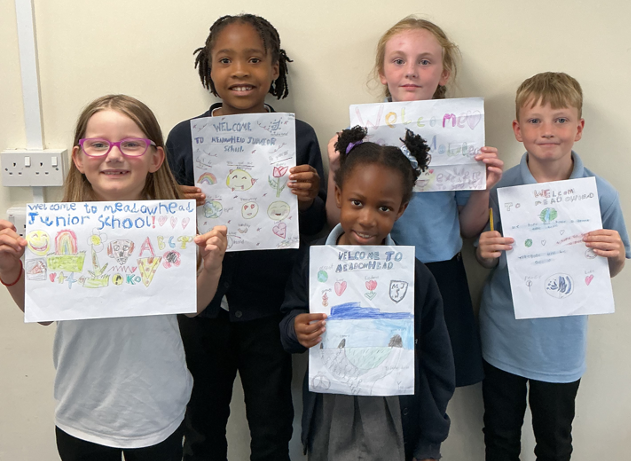
We are so proud of how well Year 3 have settled into Meadowhead Juniors. They have shown all of our school values of kindness, respect, teamwork, friendship and ambition. Because of this, they thoroughly deserved their slimy reward.
A special well done goes to Class 3B, who received extra time with Professor Slime for winning the highest attendance this half term. What an amazing achievement!
Keep up the great work, Year 3. We are very proud of you!


Autumn Week 7
English
Year 3 have been busy planning and writing their own Return Narratives, inspired by the story of The Iron Man by Ted Hughes. The children retold the moment the Iron Man appeared at the top of the steep, rocky cliff, looking inland as Hogarth stared in disbelief.
The class have shown incredible imagination and creativity, using powerful vocabulary and vivid description to bring this dramatic scene to life. To celebrate their hard work, they have published their writing in a shared book that includes their narratives, kenning poems and illustrations.
The children also followed a drawing tutorial by illustrator Chris Mould, who illustrated the version of The Iron Man that the class have been exploring. They loved learning from a real illustrator and were so proud of their own artistic creations.
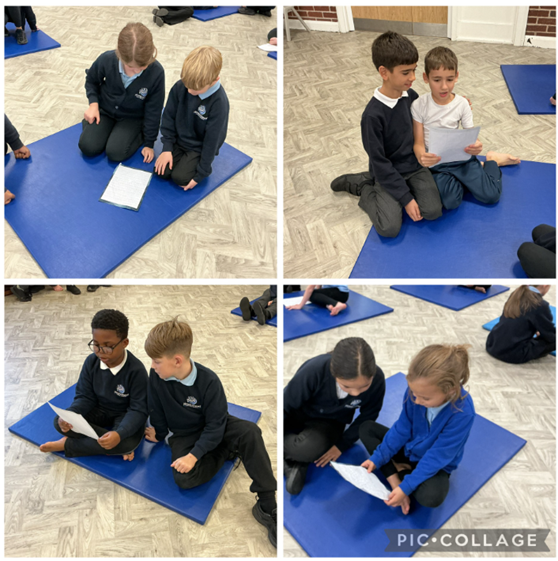
Year 3 have particularly enjoyed sharing their stories with other year groups, proudly reading their work and explaining how they developed their ideas. The children have really grown in confidence when showing their own work and are now able to read their writing aloud to others with expression and pride. They have become completely immersed in the world of The Iron Man, and having a real purpose for their writing has made them even more motivated and enthusiastic.

Geography: Exploring Maps
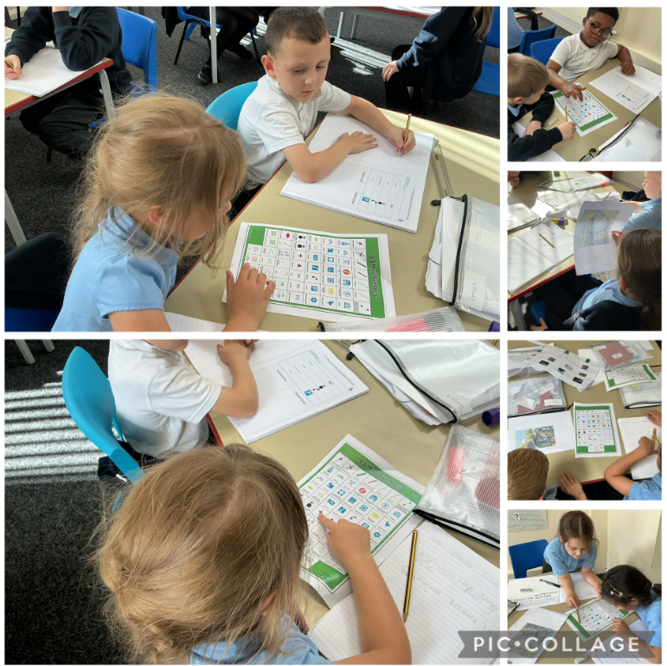
Today, Year 3 had a fantastic time being geographers. We looked closely at the maps of Lancashire and Merseyside, using our map symbols resources to help us explore.
We spotted all kinds of symbols on the maps such as train stations, churches, forests and rivers. The children enjoyed matching the symbols to their meanings and finding them on both maps.
We also talked about the similarities between Lancashire and Merseyside. Both places have big cities, motorways and rivers running through them. We even noticed that they both have coastlines. We also spotted some differences like the layout of the roads and the size of the green areas.


Autumn 1 Week 6
English: Capturing the Iron Man
This week, Year 3 have designed their own traps and acted in the roles of council members to present their new and improved trap designs. Everybody took turns to stand in front of their group and explain how their trap worked, its special features, and why it was better than the first version of the trap we looked at earlier in the week. They had to use clear, persuasive language to convince the rest of the council that their design would work best!
Some designs had clever camouflage, others had hidden spikes or pressure plates and some even used brightly coloured vehicles to attract the Iron Man.Each group acted as fellow council members and had to ask challenging questions to test how strong and clever each design really was. These questions helped the children to think more deeply and describe their ideas in more detail.


My trap is full of lava and spikes. – Zara
I have used cars as bait to lure the Iron Man inside my trap. – Lawe
I will use an indestructible cage, and it is disguised it with mirrors, so the Iron Man is not suspicious. – Gabriella
I will use a magnet attached to a rocket to attract the Iron Man and take him to the moon. – Mya
I will capture the Iron Man in a vault that is then take to the desert and let him free, but he will just roam around and will not be able to get back to the village. – Delilah
Once the Iron Man is captured, I will build a shoot that metal snack can be put down to feed him, so he is not disturbed. – Eliza
Hello Yellow
This week Year 3 took part in Hello Yellow to support World Mental Health Day. Hello Yellow is a day when schools across the UK wear yellow and raise money for Young Minds, a charity that supports young people’s mental health.We wore yellow to show that we care and to remind everyone that it is okay to not feel okay. By joining in, we are helping others feel supported and less alone.
In class we talked about how to help a friend who might be feeling sad or worried. We shared ideas like finding a quiet place to talk, listening carefully, asking how we can help and reminding each other that trusted adults can help too.
We also did role play activities where we practised how to respond if someone shares a problem. We learned that it is always important to make sure everyone is safe and that it is okay to tell an adult if something is worrying you, even if a friend asks you not to.
To end the day, we wrote kind and positive messages about our friends on yellow post-it notes. This helped us show how much we care and appreciate each other.Year 3 really enjoyed taking part in Hello Yellow and learning how to support our friends and look after our mental health.


We must take care of our friends when they feel sad. This is important to make sure our friends always feel like are supported. – Gabriella
You should always be kind to others because you don’t know what they are going through at home, so you should always take a minute to listen to your friends. – Zara
If a new student joins your class, they will already be nervous and worried so you could support their mental health by being kind and respectful towards them and make sure they feel welcomed. – Maryam
Collaborative Prehistoric Handprint Art
Year 3 have worked together to create a large collaborative piece inspired by prehistoric cave paintings. Using their knowledge of natural colours and painting techniques, the children created both positive and negative handprints, just like those found on ancient cave walls!
The children worked brilliantly in teams, combining all their work into one large and colourful display. They talked about which handprints stood out the most, what they enjoyed about working together, and where they think the final artwork should be displayed in school.
Creating a collaborative piece really brought our prehistoric art project to life!


Autumn 1 Week 5
PSHE: Tolerance
This term, Year 3 has been learning about how we can help make the world a kinder and more understanding place. Our unit Together in Our World, focused on the important themes of tolerance, empathy, refugees and inclusion.
One key activity was sorting cards showing different reasons why people move from one place to another. The children worked in groups to sort these reasons into "forced" and "choices", learning that some people choose to move, while others are forced to leave because of war, danger, or other hardships. This helped us understand why someone might become a refugee or asylum seeker.

A choice is when you choose to go to that country, so somebody might want to move to Spain because they want to live in a warm country but some people are forced to leave their countries because there may be a war and they are no longer safe. – Lawe
You might be forced to leave your country because of a natural disaster such as an earthquake, a flood, a tornado, or a tsunami. – Gabriella
there might be dangerous gangs that are putting your family in danger. – Leo
People that are forced to leave their country and their home will feel heartbroken. – Hunter
They will feel emotional because they are leaving their houses, their families and friends, their school. – Jaxon
We should be kind to people that have lost so much in countries that are at war because they have been forced to leave. – Adelynn
Art
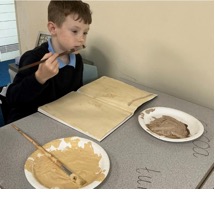
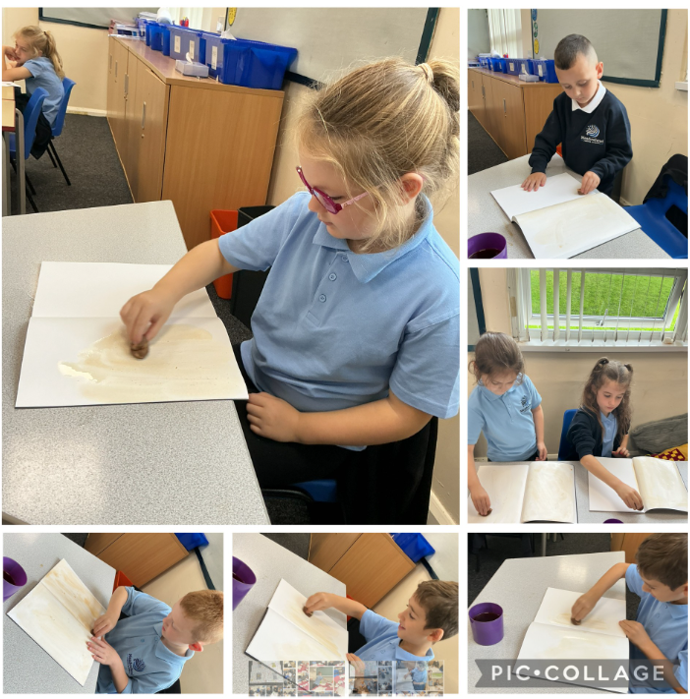
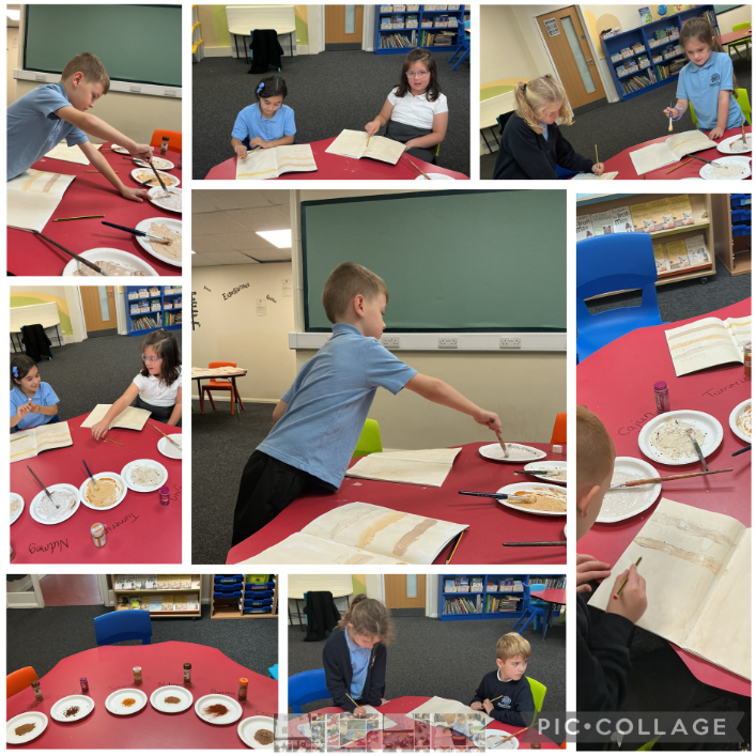
As part of our prehistoric art unit, Year 3 have been exploring how Stone Age people made paints using natural materials.The children experimented with creating their own paints by mixing flour and water to form a base. They then added natural pigments, including spices like turmeric, nutmeg, cinnamon and chilli powder, as well as coffee grounds, cocoa powder, and crushed charcoal.The children tested their paints in their sketchbooks by making marks and wrote down which ingredients they used. They discussed which mixtures made the most vibrant colours and why prehistoric artists were limited to natural shades like reds, browns, blacks, yellows, and whites.

Cave men and women would need to find natural resources to make colour with as they couldn’t just go to Aldi and buy paint. They would find berries, leaves and different fruit and vegetables and they would crush them and add water to create a paste. They would then paint on the cave walls. – George
During the stone age, they would need to make their own paint. They would paint handprints and animals on the wall. Animals were important to them because their whole life would surround hunting animals to survive. – Zara
They would use earthy colours from natural items found in the wild, so there would be no bright pinks or blues. – Leena
They would burn animal fat to create an oil lamp so they could see inside dark caves. – Gabriella
when cave men hunt, they eat the meat and use the animal skin for clothes and blankets to sleep. – Freddie
English
This week in Year 3, something very exciting happened. We received a very important letter from the Town Mayor. The letter explained that the Iron Man has escaped from the pit, and the town is in need of urgent help. That’s when we were called in.
We have been asked to act as professional trap designers. Our first task was to investigate the original trap to see what worked well and what didn’t. We worked together to discuss and write down words and phrases to describe the trap’s strengths and weaknesses.
After this, we began thinking carefully about how we could improve the design. We will be working on our own improved traps, thinking like real engineers and using our best explanation skills to describe our ideas.

Autumn 1 Week 4
English
In small groups, the children acted as Hogarth and the Iron Man, creating freeze frames that displays the moment when the Iron Man is first seen on the top of the cliff, looming down over the fields, showing their reactions to seeing the giant. The children then described what the Iron Man looked like, and how Hogarth may be feeling after seeing him. Year 3 were able to develop their descriptive language verbally before writing.


Prehistoric Art
As part of our prehistoric art topic, Year 3 have been learning about Stone Age artwork and what makes it unique. The children explored how prehistoric people often painted animals and discussed why animals might have been so important to them. Using photos and line drawings of UK animals, the class practised spotting simple geometric shapes to help them sketch animals in proportion. They carefully mapped out their drawings in pencil before going over the outlines in pen, creating their own prehistoric-style animal art in their sketchbooks.


PSHE
Year 3 began their PSHE (Personal, Social, Health and Economic Education) lessons by thinking about what PSHE is and how we can all learn well together. The children reflected on what they remembered learning in Year 2 and shared their favourite activities that helped them learn. They discussed why some lessons stood out, whether it was the topic, how it was taught, or how it made them feel. We talked about why having rules in PSHE is important to help everyone feel safe, respected and able to speak freely.


At the Infants School we learnt about online safety. need to be careful about strangers trying to speak to you and finding out where you live and what school you go to. They could pop up and try and speak to you on an online game. We learnt that if that happens, you should tell your parent. – Eliza
Don’t share your password or go on camera at home. – Jake
We learnt about bullying in the infants. If you see or hear somebody being bullied at school, you should tell an adult. If you are being bullied, you should tell you teacher or your parents. – Jannat
We were visited by two fire fighters who taught us how to be safe in our homes and at school. They told us some safety tips we can use if there is ever a fire. – Mya
Autumn 1 Week 3
During our maths starter activities, Year 3 have been practising number bonds to 100 using bead strings to represent multiples of 10. The class used their knowledge of number bonds to 10 to form bonds to 100 efficiently.


Year 3 were able to correctly carry out addition of two-digit numbers that require exchange by first using base tens and ones and then by using their own pictorial representations.


English
This term we will be focusing on ‘The Iron Man’ by Ted Hughes. Before introducing the text, the class were presented with a variety of objects that sparked their curiosity and had them questioning what clues they were being offered about the text. They were then asked to ‘step inside’ illustrations by Chris Mould and explain what they might see, hear, smell of feel inside each illustration. The class gathered some fantastic words and phrases and then created their own predictions for what they think the story might be about.

The class have worked hard writing their own Kenning Poems about the Iron Man this week. They used some ambitious vocabulary and performed their poems with confidence.

Autumn 1 Week 2
Year 3 have had an amazing start to the school year and have settled in wonderfully! The children have already shown our school values of respect and ambition by working hard, showing kindness, and giving their best in every lesson.
Write Dance
It’s been a busy and exciting week in class! We were lucky to be visited by Mrs Garner, who led a brilliant gross motor skills session. Through fun and active exercises, we worked on building up our shoulder and arm muscles, to help us improve our pencil grip and handwriting. The children loved the challenge and gave it their all!


Gymnastics
We also had our first gymnastics session with Coach Elizabeth, who introduced us to some fantastic balancing movements. The class showed great focus and control as they explored new ways to move and hold their balance.


We are so proud of how well Year 3 have started the year, and we’re looking forward to all the exciting learning still to come!
Summer 2 Week 4
English
This week, Year 3 explored the vehicle text ‘Into the Forest’ and worked in groups to recreate the scene from the illustrations, acting as the characters or objects in the pictures. They used freeze frames to show other groups, who then had to guess which part of the story they were performing. Year 3 also made two parallel lines to form a conscience alley. Elsie acted in the role of the character from the book and each side had to convince her to either obey or disobey the mum in the story by taking the shortcut through the forest, or by choosing to take the longer route. We ended with a game of ‘Hot Seat’ to infer the characters' feelings.

I enjoyed acting in the roles of the different characters from Into the Forest and I liked guessing what other groups’ freeze frames were. I also liked acting out show not tell phrases. I acted as the boy desperately looking over his shoulder with his eyes darting from right to left and the class eventually guessed correctly. – Lyric
I enjoyed being on the side of the conscience alley that was persuading the boy to not obey his mum. It was fun to think of persuasive phrases. – Shaheer
I liked that everyone got a chance to share their ideas during conscience alley. – Amelia
By playing hot seat, we were able to think about how the character was feeling at each point of the story. - Daniel
Grammar
This week in Year 3, we’ve been learning all about direct speech and how to punctuate it accurately. The class has been learning how to use inverted commas around spoken words, to ensure each piece of speech begins with a capital letter, and to use a piece of punctuation before closing the speech marks. We have also been exploring how to include more exciting reporting clauses and where we can place them to create more varied sentences.

Maths
This week we have been exploring 3D shapes. Year 3 have been naming various shapes and identifying how many faces, edges and vertices they have. They discovered how a sphere, for example, has no edges at all, while a cube has 12!


Summer 2 Week 3
Stay and read
This week we have welcomed a visitor from Mill Hill library to share how our school can enter a summer reading competition. This is a wonderful way to keep children motivated to read over the holidays. Children also enjoyed some hotdogs and ice pops and had the opportunity to choose some of their favourite books to read to their parents and carers.

I like how we got to read books to our adults. I read ‘Grandad Wheels’ to my grandma. I will be entering the library competition and aim to read 6 books over the school holidays. – Charlie
English
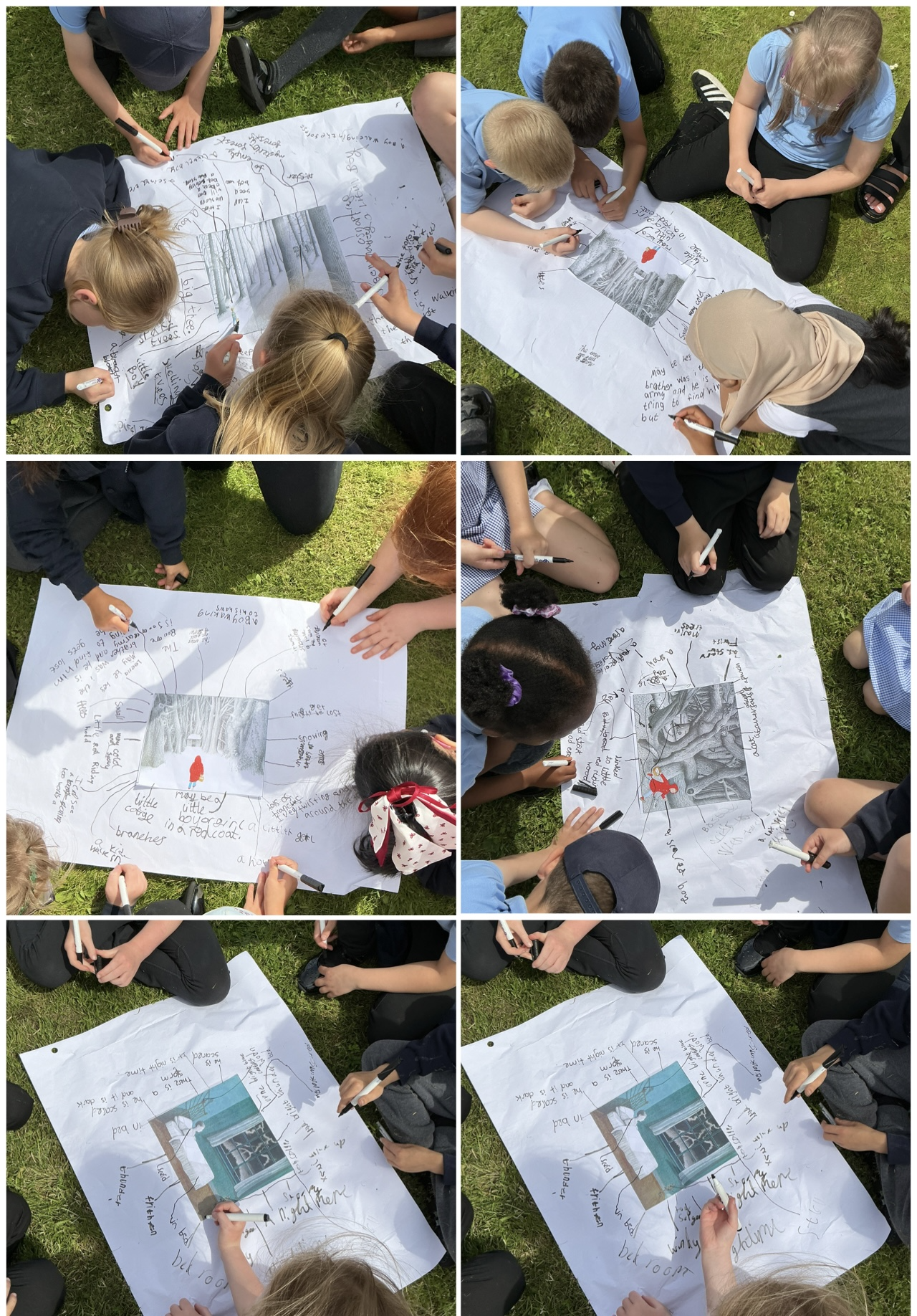
This week, the children have been listening to a soundtrack of a forest accompanied by a dark, gloomy woodland image. They moved around the classroom, imagining they were walking through the forest, predicting what our new vehicle text might be. Year 3 were then shown objects and illustrations from the text that offered them more clues about what the story may be about and worked in groups to share their ideas.

I predict the story will be about a boy who wears a red coat and enters the forest to enjoy a picnic but gets lost. He finds a book that helps him return home. – Charlie
The clues made me think that the story will be full of different fairy tales because the red coat is like Little Red Riding Hood’s, the cow is from Jack and the Beanstalk, the book is Hansel and Gretel and the doll looks like Goldilocks. Maybe all those characters will be in the story, like the film, Into the Woods. – Kashana
I think the boy in the red coat will be delivering the cakes to his grandma’s house, like Little Red Riding Hood. He will walk through the forest, and he will be followed by the Big Bad Wolf. But I think it will be slightly different from the original story because he is a boy, and I think other characters from other books will help him along the way. – Lyric
Gymnastics
Year 3 have been using the vaulting apparatus this week to practice their flexibility, control and balance. The children ran towards the table, placed their hands on top and jumped onto the table in one fluid movement. They then climbed to their feet and dismounted in one jump with their arms outstretched.

I am proud of myself this week. I was a bit nervous to jump on and off the vault table at first but I’m getting better each time! – Paisley
Science
During our Light unit, Year 3 participated in an activity where they were blindfolded and had to guess what objects were inside each bag. The class made predictions and later discovered what these objects were, once they had been illuminated by light. This was to show that light is a type of energy which comes from a light source, and we need light for our eyes in order to see. Year 3 learnt that light sources can be natural, such as the sun, which is our main source of natural light, or from things burning. We also get light from man-made sources such as ceiling lights, lamps, torches, candles and even electronic devices. The class were able to sort these into two categories, ‘light source’ and ‘not a light source.'

Summer 2 Week 2
Author Visit
Famous author and illustrator Chris Mould visited our school today! He joined us for an illustrator workshop and explained to us how he draws pictures for stories that he has written and some for other authors too. Year 3 were extremely excited to welcome Chris to our class as his illustrations of the Iron Man inspired our Animation Art unit. Year 3 were eager to show him their versions of the Iron Man too. The children had the opportunity to ask Chris many questions about his career as an author and illustrator and what inspires him.


I enjoyed asking Chris questions and I found out that his favourite genre of writing to illustrate pictures for is magical adventures. – Shaheer
I enjoyed watching Chris create the pictures and I like how he explained how anyone can become an artist at any age. You just have to start simply and pick out the shapes from an image first and then add detail. – Kashana
I was really excited that we got to meet such a famous author and illustrator. I couldn’t believe that it was actually him standing in our classroom, after all the times we have watched his videos, drawing the Iron Man during our art lesson. – Archie
I enjoyed showing Chris the iron men that we created. He said that he liked the way we had made them move, using split pins. – Isla
He showed us how he recreated a life-sized Iron Man. He had to make the parts separately because they were so huge, and he had to make sure they could get out the door of this studio. The Iron Man is now in a museum in Halifax. – Isla
Chris Mould inspired me to start writing stories by drawing the characters first and then the story coming later. – Paisley
Father's Day
This week we have been making cards to give to fathers and fatherly figures in our lives to celebrate Father’s Day.

I appreciate my dad because he is very kind-hearted. – Charlie
I love my dad because he provides for me and my family. – Daniel
I love my dad because he takes me camping, and we get to spend lots of time together. – Harris
I love my dad because he gives me lots of hugs and I know that he loves me. – Amelia
Our Fundraising Hero
Paisley has amazed us this week with how much money she has raised for Cancer Research! She ran the Race for Life and raised £240! We are so proud of you Paisley, what an achievement!

Summer 2 Week 1
English
During our English lessons, Year 3 have been acting in the role of Egyptologists on an archaeological dig to find ancient artefacts at various sites such as next to the pyramids in Cairo, outside the tombs in Beni Hasan and climbing statues at Karnak and The Colossi. The children described various artefacts they found such as ancient jewellery made of gold and gemstones, weapons, amulets, canopic jars and papyrus scrolls with secret hieroglyphs.

Today we received a letter from Emily Sands, and she asked us to keep the contents of her diary secret because she didn’t want people to try and discover the lost tomb of Osiris because it is very dangerous and groups of people that have gone for looking for it before, have disappeared. – Kashana
I enjoyed acting in the role of a news reporter. I interviewed Shaheer, who was acting as a famous archaeologist who had just returned from an excavation site in Egypt. – Amelia
I acted as an archaeologist and in the interview, I explained that I found some magnificent jewels deep underneath the sand. I used adjectives to describe the ancient artefacts, to explain to the viewers what each artefact looked like, in detail and to make it sound more interesting so that they would want to carry on watching the news. – Brooke
It is also important to use prepositions when describing where the artefacts were found, so the viewers know where exactly the artefacts are being discovered. If you describe where and how you found the objects, the viewers could feel like they were there, which makes it more exciting for them to listen to. – Charlie
We used loud, clear voices to deliver our news report, and we made sure we were sat up straight and looking at the camera, using our body language to show we are real news reporters that have great posture to look smart and polite. – Daniel
PE
We are delighted to have the opportunity to work with Coach Catherine again this term. Year 3 have been working on the gymnastic skills they have covered so far. They practised movements such as tuck, pike and a forward roll and performed sequences of these. The class also worked on developing their fundamental skills, focusing on balance and control.

I liked that we recapped the different gymnastics moves. I was happy that I could remember how to do a tuck. - Daniel
For 2 of the movements, the straddle and pike, we had to keep our legs straight. I had to focus to keep my legs locked in place. - Charlie
PSHE
Year 3 have been discussing what roles people in their families have and what responsibilities they have at home. We also discussed whether there are some jobs that are more suitable for women, or some jobs that only men can do. The class worked in groups to share their thoughts, and we discussed gender stereotypes and challenged them. Year 3 were able to confidently express their opinions as part of the class discussion and were respectful when listening to others.

I believe that me and women should be able to choose whatever job they like. – Shaheer
It is important that people have the chance to choose what they want to do as their career so they will enjoy their job and try hard. – Amelia
Children should grow up knowing they can be whoever they want to be and get any job they want, no matter if they are a boy or a girl. – Kashana
Summer 1 Week 5
Behaviour Treat
Year 3 have enjoyed their well-deserved behaviour treat this term by joining in with relay races on an inflatable assault course! The class enjoyed cheering on their friends and racing one another.

I think we all deserved this treat this term because we have tried hard to follow our school values and show respect. – Kashana
I enjoyed taking part in the girls vs boys race. We had to tag our teammates before they could go. I cheered on my team to motivate them. – Shaheer
Science
We have been learning about water transportation in plants this week. We added food colouring to some water in a jug, so we could observe how the flower’s stem, stalks and petals changed in colour over time, showing us where the water had been transported.

We have also recorded our last results of an observation we conducted throughout the unit. We have discovered that although the plant with no sunlight and no soil have survived so far, they do not appear healthy. The plant that received no water has died. We concluded that a plant must have water, sunlight and soil to grow and be healthy.

I liked checking on the progress of the plants and observing them each day, to check if there were any changes. – Amelia
I learnt that if you put food colouring in water for the plant to take up through its stem, the whole flower will not change colour, just the edges of the petals. – Paisley
Plants also need space to grow. If all plants grew really close together, they wouldn’t have room to grow, and they might not be able to get the right amount of water and nutrients from the soil. – Charlie
Plants disperse seeds so they don’t all grow close together. They can disperse them by wind, water and bursting. – Daniel
Seeds can also be dispersed by animals eating them, or by getting caught on an animal’s coat or a human’s clothes. – Shaheer
Geography
Year 3 have been locating the Lake District on the map of the UK using an atlas. They were able to identify towns, mountains and lakes by using the key to identify the correct symbols on the map.
The Lake District is a national park in the Northwest of England. The tallest mountain in England, Scafell Pike is in the Lake District. – Kashana
Building on Kashana’s answer, Scafell Pike is not the tallest mountain in the UK. The tallest mountain in the UK is Ben Nevis in Scotland. – Carter
The tallest mountain in the world is Mount Everest in the Himalayas in Asia, on the borders of Nepal and China. Many people set themselves challenges to climb Mount Everest, but it can be very dangerous and requires lots of training. – Lyric
Summer 1 Week 4
English
In groups, Year 3 created scenes where they are inside an ancient pyramid and encounter a dangerous trap. The class used roleplay to build the scene from exploring along a passageway to the moment when they are just about to be caught. We then used freeze frames, so pupils could share how the character would have been feeling at that moment and use words and phrases to describe what they are thinking and how their bodies are reacting, e.g. trembling, heart thumping, shivering.

I am going to build suspense in this part of my story by using descriptive language such as ‘the floor began to rumble, and the ancient walls started to crack’. This would make it more exciting for the reader. – Skye
I am going to include some actions to show the reader that the character is frightened without saying it. For example, I will use, ‘a shiver shuddered down my spine’ and ‘sweat trickled down my face’ – Kashana
I am going to include many traps inside the ancient Egyptian pyramid such as a boulder chasing my character, scorching flames shooting from the walls and sharp arrows shooting in every direction. This will make my writing more exciting. – Charlie
PE
Year 3 enjoyed participating in striking and fielding games. This week they worked together in batting and fielding teams, practising their form when batting and their accuracy when throwing and catching with their teammates.

It is important to be accurate when throwing to each other on the fielding team because the quicker we can pass the ball to the whole team, the quicker we can catch the batting team out. If any of us drop the ball, we lose precious time. – Harrison
Science
As part of our plants unit, Year 3 set up an investigation to discover what a plant needs to grow. We planted 4 plants, one with no water, one with no sunlight, one with no soil and one that had water, sunlight and soil. We will be observing the changes that occur with these plants over time. Year 3 made a prediction and explained how they set up the investigation.

I think the one with cotton wool instead of soil might still grow for a little bit because it can still soak up the water. – Charlie
But it will eventually die because there are no nutrients in cotton wool, like there is in soil. – Daniel
I think the one with no water will die because plants are living things and they need water to survive. – Bella
I think the one with no sunlight might still grow but I don’t think it will be a healthy plant. – Lyric
Summer 1 Week 3
VE day celebrations.
On 8 May 2025, we mark the historic 80th anniversary of VE Day, with families and communities coming together to unite and celebrate 80 years of peace since the end of World War II in Europe. As a school, we have celebrated by joining a live assembly with schools across the country, paying our respects with a 2-minute silence at 12pm, creating posters, leaflets and flags and enjoying a VE picnic outside. In the afternoon, we invited parents and carers to come and have a look at all the amazing work Year 3 has created.


VE day is about Europe celebrating victory because Germany surrendered. There was a radio announcement made by Winston Churchill, who told Britain the World War 2 had ended. – Charlie
Winston Churchill said the fight was not over because people still needed to fight for peace and work hard to rebuild the damage that has been done. – Shaheer
During the war, millions of people sacrificed their lives so we can have peace today. – Lyric
Women helped in the war by working in munition factories. They would go to work at 5am to make bullets and shells. They were in danger at work because they were working with harmful and explosive materials. One time, a factory did explode and killed hundreds of people. – Skye
Science
As part of our new science unit focusing on plants, Year 3 investigated the school grounds to see which plants were growing nearby us. This inspired the class to explain their prior knowledge from Year 2 and think of new questions they would like to find the answers to during this unit.


People like putting flowers in their house because they look nice and they can make your house smell nice too. – Grayson
Flowers normally grow in spring. – Shaheer
I liked doing the observation outside because we get to explore the outdoor and look closely at all the plants and trees that grow around our school. – Paisley
Me and my partner spotted many dandelions. – Shaun
Plants need water and sunlight to grow. – Harris
Flowers are like humans because they water to survive. – Bella
Plants need soil to grow so the roots can grow under the soil. The roots drink up the water from the soil. – Shaheer
Plants mostly grow outdoors because they need fresh air. – Daniel
Summer 1 Week 2
Geography
In geography, we have started our new unit focusing on the Lake District. Year 3 have been exploring what a National Park is and the appeal of the Lake District, discussing why people may choose to visit. This week we have focused on how to read a map and use a key efficiently by identifying symbols. The class explored Digimap, an online mapping tool, to look at a map of the Old Man of Coniston in Cumbria and used the key efficiently to identify different geographical features. The class was able to identify the triangulation point and contour lines that connect points of equal height above sea level.

I think people would like to visit the lake district because they can explore the outdoors and learn about the wildlife. – Daniel
If you get lost when you are walking up a mountain in the Lake District, you should ask somebody walking by for directions, or you could turn back around and head the way you came. If somebody gets hurt whilst walking up a mountain, you should call Mountain Rescue. – Shaheer
We need to use symbols on maps because there wouldn’t be enough room on one to write down the names of each place, lake, road and mountain. – Paisley
A blue triangle symbol on a map shows the triangulation point, which is the highest point of land. At the peak of a mountain or hill, there will be a triangulation pillar which is made of concrete and helps people map the land accurately. It is at the top of Pendle Hill. – Charlie
PE
This term we will be focusing on striking and fielding in our PE lessons. Today we have been practising our throwing and catching skills, aiming to throw a ball to our partner through a hoop, focusing on accuracy. We then worked in teams and carried out a batting and fielding exercise were Year 3 had a chance to practise their batting skills, by hitting the ball from the tee and making as many runs as possible before the fielders retrieved the ball.


I learnt how to hold the cricket bat and stand side on to aim for the tee accurately. The umpire in my team offered me feedback to help me improve my cricket skills. – Charlie
I enjoyed racing to get the ball as the fielder to make sure the batter didn’t get too many runs. – Shaheer
DT
In DT, Year 3 have designed and made an easter themed hanging decoration based on our design criteria. They used their stitching skills to attach two pieces of felt and filled with cotton wool to create an appealing product that could be used to decorate a home during the easter period.

Summer 1 Week 1
English
It’s writing week! Year 3 have been writing their own Return Narratives related to the book Jemmy Button by Alix Barzelay. The purpose of writing was to narrate, and they wrote 5 parts, including setting descriptions of many diverse settings, such as an island, the ocean and a busy city. The children portrayed to the reader how their main character may have felt when they visited a new place and how they may have missed home.
I have tried to include actions that shows how the character is feeling, rather than just saying the character is feeling sad, I wrote that he clutched his aching heart. – Charlie
I have included word families in my writing, such as joy, overjoyed and joyful. – Daniel
VE Day
This week we have been learning all about VE Day, which stands for Victory in Europe Day. This was the day near the end of World War Two when fighting against Nazi Germany in Europe stopped. World War Two had begun in 1939. On 8th May 1945, Germany officially surrendered. Year 3 have been exploring how World War Two shaped a multicultural Britain, focusing on countries that supported Britain during the war. We looked at a variety of people who were influential in the war, focusing on Winston Churchill, the prime minister of the UK, Margery Booth, a British spy and Alan Turing, a code breaker. The class researched their lives and how their contributions impacted the war and created posters to add to a ‘Wall of Heroes’ display in school.
Alan Turing was a mathematician that helped break codes, so that Britain could work out Germany’s secret messages. – Brooke
Margery Booth was an opera singer who married a German man before the war. People thought she was on Germany’s side because she lived in Germany, but she was loyal to Britain and became a secret spy. – Kashana
Winston Churchill was the UK prime minister, and he was well known as the British bulldog, which was a symbol of how determined he was. He was famous for his powerful speeches that inspired many British people. – Carter
Maths
As part of our addition and subtraction unit, Year 3 have been learning how to subtract numbers with three digits using formal written methods of column subtraction, with exchange from tens into ones and hundreds into tens. They have used rounding to estimate, and inverse to check the answer to a calculation.

You must be careful to always place the digit in the correct place value column, otherwise your answer will be incorrect. – Lyric
Spring 2 Week 6
Easter Egg Surprise
Our 3B class member Lana surprised us with an Easter egg for every single child in the whole school! She explained, “My family bring Easter eggs in for everybody as part of my uncle’s charity, the Shaun Haggart Foundation.” Lana’s family set up a non-profit charity based in Blackburn after her uncle’s passing. They set this up in his name to have something to remember him by and to help all kinds of people in the community.

Behaviour Treat
Year 3 were so excited to discover our behaviour treat this term was a game of quidditch. The class was split into two teams, Gryffindor and Slytherin! The children worked together to score using quaffle balls in the opposing team’s goal post rings, all while avoiding being hit by a bludger and trying to capture the golden snitch! Year 3 enjoyed their well-deserved reward for all their hard work this term and loved playing with their friends in the sunshine.

I liked that it was harry potter themed. – Amelia
I liked how we got to play quidditch with three different balls, just like they do in the books and films. – Charlie
I liked being outside with our friends and working as a team. – Daniel
Science
As part of our magnets and forces unit, we tested how much friction each material would create. We tested that by releasing a toy car from the top of a ramp and timing how long it would take for the car to reach the finish line. The material that created the most friction was hessian because it has a rough texture and therefore the car took a longer time to reach the finish line.

I predicted that the hessian would create the most friction and the car would take a longer time to reach the finish line, and my prediction was correct. - Harrison
Spring 2 Week 5
RE
Year 3 have been learning about the Easter story this term. Our lesson this week focused on Palm Sunday, which is celebrated each year by Christians. The class discussed how Christians believe that Jesus arrived in Jerusalem to celebrate Passover, entering the city riding a donkey. He was greeted by a crowd acclaiming him by waving palm branches and laying cloaks on the ground to honour him. Year 3 wrote poems to describe this event and performed them for the class.
People set palm leaves and their clothes down on the street so Jesus, riding the donkey through Jerusalem, would not need to touch the floor as they believed he was too holy. – Charlie
Christians celebrate Palm Sunday to remember a joyful time during the Easter story. Crowds gathered along the street to wave palm leaves and sing and cheer to Jesus. – Kashana
The crowds were confused because they expected Jesus to arrive on a horse because he is so special, but he arrived on a donkey because he wanted to show that he was not better than anybody else. – Archie
Christians still use palm leaves on Palm Sunday and some places have festivals where they walk through the street and wave palm leaves in the air and some churches make symbols of the cross using palm leaves – Lana
Mother's Day
We have been celebrating Mother's Day this week by creating cards to thank our lovely mums and all the maternal figures who play important roles in our lives.

Spring 2 week 4
History
This week we have been exploring the ancient Egyptians. We started our unit by investigating an artefact. Year 3 worked in groups and asked questions about the ancient Egyptian shaduf painting. They discussed what they could see and what period of time they believed it was from. As a class, we also discussed the definition of an artefact and the difference between primary and secondary historical sources. The class then placed Ancient Egypt in a timeline and located Egypt and the River Nile on a world map using atlases.
The River Nile is in Africa, and it flows through 11 countries, including Egypt. – Shaheer
Ancient Egypt came after the Stone Age and was happening at the same time the Iron Age was happening in Britain. – Kashana
Ancient Egyptians created the first type of paper from a papyrus plant that grew along the River Nile. – Daniel
The Egyptians created a solar calendar to help split the seasons, with different months. – Lyric
The ancient Egyptian civilisation began 5000 years ago and lasted around 3000 years. – Charlie
Pharaohs were kings and women could also be pharaohs, and the ancient Egyptians believed that pharaohs were gods on earth. They believed in over 2000 gods. – Bella
When pharaohs and special people died, they would wrap them with cloth. This was called mummification. They were then buried in coffins inside tombs. They would take all their most special possessions with them as they believed they might need them in the afterlife. – Skye
Maths
As part of our volume, capacity and mass unit, we have been focusing on measuring mass this week. This lesson allowed children to use and apply their skills and knowledge to estimate and measure the capacity and volume and apply them to estimating and measuring mass. We explored familiar amounts of everyday objects such as a 400g tin or a 1kg bag of sugar, to help them estimate the mass in a range of differently shaped and sized objects. They were then able to accurately measure (to the nearest 10g) revisiting their skills from place value related to reading scales in different steps.
I liked estimating the mass of each object before measuring them and seeing how accurate my estimations were. – Bella
There are 1000g in a 1kg. You can buy bags of sugar from the shop that weigh 1kg. – Harrison
Once we had a list of our estimations, and the actual mass of each object we could work out the difference between them. – Shaheer
Spring 2 Week 3
Science Week
This week we have been celebrating science week! We have been learning about how to look after our planet and become eco-warriors. As we have been learning about rivers in our English lessons and the River Nile in Geography lessons, we decided to focus on water pollution and how humans are affecting our planet. We learned the lyrics to ‘SOS from the kids’ and enjoyed singing it as a class. We also created posters to spread awareness about water pollution and wrote open letters addressed ‘Dear world’ to capture the attention of everybody, to help stop water pollution and save our rivers!
We must help save our planet and save our rivers because some people are still dying from drinking dirty water. – Lyric
Water pollution can harm animals because people are littering plastic and this means some animals in rivers and oceans are eating the plastic and becoming very ill, and sometimes they can choke on the plastic. – Paisley
Cruise ships in the River Nile can leak oil and this can poison the fish that live in the river. People who live in Egypt rely on the river for drinking water and fishing. If they eat the fish that are poisoned, they could become sick too. – Bella
We learnt about the 3 different types of pollution, which are land pollution, air pollution and water pollution. They are all polluting the earth and we must try to protect the world because we only have one earth, and we must look after it. – Charlie
English
Year 3 have begun their new book Jemmy Button by Alix Barzelay. The class have been enjoying using role play to explore vocabulary. The children ‘stepped inside’ the setting images and reflected on what they might see and hear, such as the different noises of the tropical forest or the colours of the fish in the ocean. The children reflected on their feelings through miming and offered explanations of what they saw to their peers. The children then imagined that they were Jemmy Button and how it would feel to live in a jungle and have no idea what a city is like. Year 3 worked in groups to write down all the nouns they could see and use adjectives to describe them.

Year 3 have written their poems based on an illustration from the book. They focused on the part in the story were Jemmy travels across the ocean for the first time and looks out at the bright, colourful fish swimming by. Year 3 performed their poems, adding actions to develop their performances. The children worked hard to consider how to use their voices to add intonation and emphasis to the lines of the poem.